There is a letter on a tag under your sofa cushion, and it determines more about how that sofa can be cleaned than the colour, the price or the brand. Most people have never looked at it. It is worth two minutes.
Where the tag is
Look in this order:
- Under the seat cushions — lift them out and check both the cushion covers and the deck underneath.
- The underside of the frame — tip the piece forward or lie down and look up. This is where it usually is on older furniture.
- Inside a zipper on a cushion cover.
On a sectional, check each section separately. They are often manufactured in batches and it is not unheard of for pieces of the same set to carry different codes.
The tag lists fiber content and then, usually at the end, a single letter. That letter is the cleaning code.
What each code means
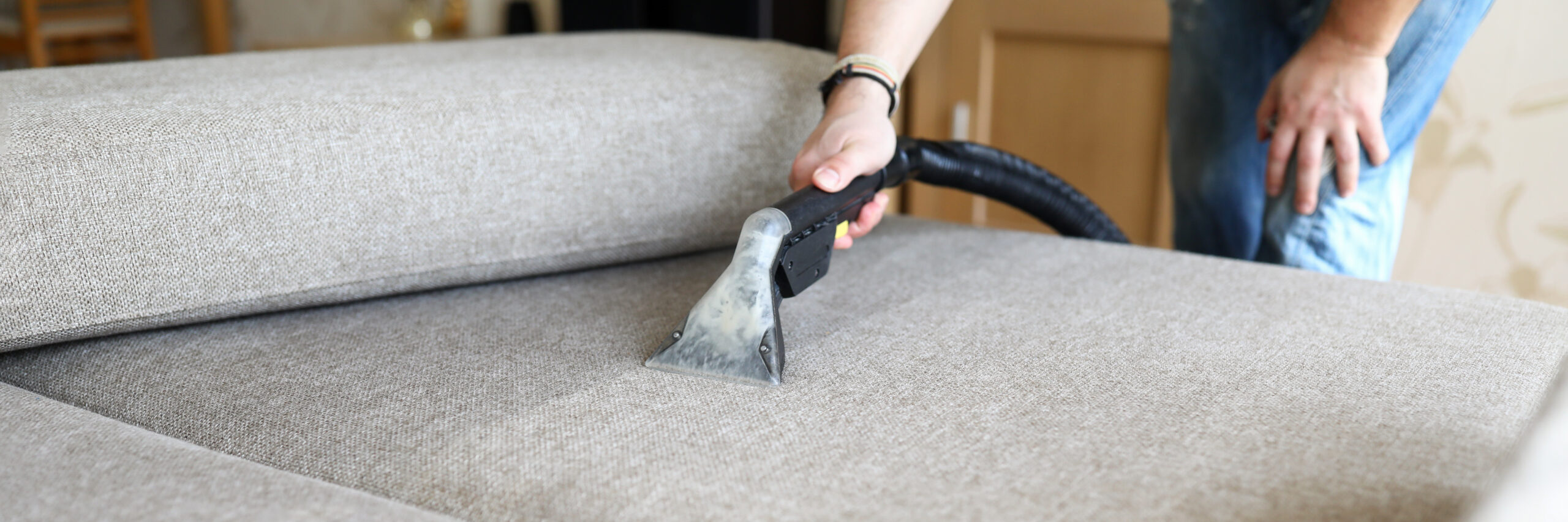
W — water-based cleaning. The fabric tolerates water-based methods. Most synthetics and many blends fall here. This is the most forgiving category and where hot water extraction is generally appropriate.
S — solvent only. Water may stain, ring or shrink this fabric. It needs a dry-solvent method instead. Common on rayon, acetate, some silks, and certain delicate blends. Getting this one wrong is how a sofa ends up with a permanent water ring in the middle of a cushion.
WS — either. Water-based or solvent both acceptable. Pleasantly flexible, and it means the method can be chosen to suit the soiling rather than the fabric’s limits.
X — neither. Vacuum and light brushing only. No water, no solvent. Usually a very delicate or unusually constructed textile. An X code genuinely limits what is possible, and we will say so rather than pretend otherwise.
Why the code matters more than the stain
People usually call about a specific mark. But the fabric decides the method before the stain does — a treatment that lifts a particular stain beautifully from a W fabric can ruin an S fabric in the process, and you will have traded a spot for a ring.
So the order of operations is always: identify the fabric, then choose the method, then address the stain within what the method allows. Any other order is gambling with someone’s furniture.
When there is no tag
This is common, and not a dead end. Older pieces, custom upholstery, imported furniture and anything that has been reupholstered frequently have no code at all.
In that case identification is by inspection and testing: fiber characteristics, weave, backing and construction, followed by a test in a genuinely hidden place — the back of a skirt, the underside of a cushion, behind the frame where nobody looks. We watch for colour transfer, texture change and drying behaviour before anything touches a visible surface.
That test step is not optional and it is not a formality. It is the difference between a professional and someone hoping for the best on your sofa.
The fabrics that need the most care
Natural fibers — cotton, linen, silk, wool — are more absorbent and more prone to shrinkage and colour movement than synthetics.
Rayon and viscose are the ones we treat most cautiously. They lose strength when wet and can shrink or distort. Frequently S-coded, and for good reason.
Velvets and cut pile can develop permanent pile crush or watermarks if handled wrong, and the damage is about texture rather than colour — which means it shows in every light and cannot be cleaned back out.
Leather is not covered by this code system at all; it is a different discipline with different products.
What is realistic
Upholstery responds well to cleaning, and it is honest to be clear about limits:
- Soil and body oils generally lift substantially. This is the bulk of what makes furniture look tired, and it is the most satisfying part of the job.
- Old set-in stains vary enormously. Some release completely; some have bonded to or dyed the fiber and will not.
- UV fading cannot be reversed by cleaning. Sun does not sit on fabric, it changes it. A sun-faded arm will be a clean faded arm.
- Wear — pilling, thinning at contact points, crushed pile in a favourite seat — is physical, and cleaning does not rebuild it.
We would rather set that expectation before we start than have you disappointed afterward by something that was never available.
One local pattern worth knowing
In open-plan living rooms — extremely common in the newer parts of the San Gabriel Valley and throughout Valley homes like Sherman Oaks — the sectional absorbs most of the household’s daily use while the carpet around it still looks presentable. Body oils bind into upholstery fabric differently than soil binds into carpet, so furniture often needs attention on its own schedule rather than only when the carpet is being done.
Cleaning the carpet and skipping the sofa is the single most common thing we see people regret.
Before you call
Find the tag if you can, and take a photo of it along with the piece itself. Text both to (626) 260-6256 or call (800) 794-9241, and we can tell you a great deal before we arrive — including, occasionally, that what you are looking at is not worth paying us for.
More at upholstery cleaning, sofa & couch cleaning and sectional cleaning.