To clean a microfiber couch, start with the cleaning code on the tag. If it says W or WS, vacuum the couch, then clean spots with a water-based upholstery cleaner applied to a white cloth, blot lightly, dry the area quickly with a fan, and brush the nap once it’s dry. If it says S, skip water entirely and use a solvent upholstery cleaner made for S fabrics. Either way, use as little liquid as possible: the usual microfiber mistake is a water ring from cleaning too wet, not a stain that wouldn’t come out.
Here’s how to do each step, how to deal with rings you already have, and what’s worth leaving to a professional.
What does the cleaning code on a microfiber couch mean?
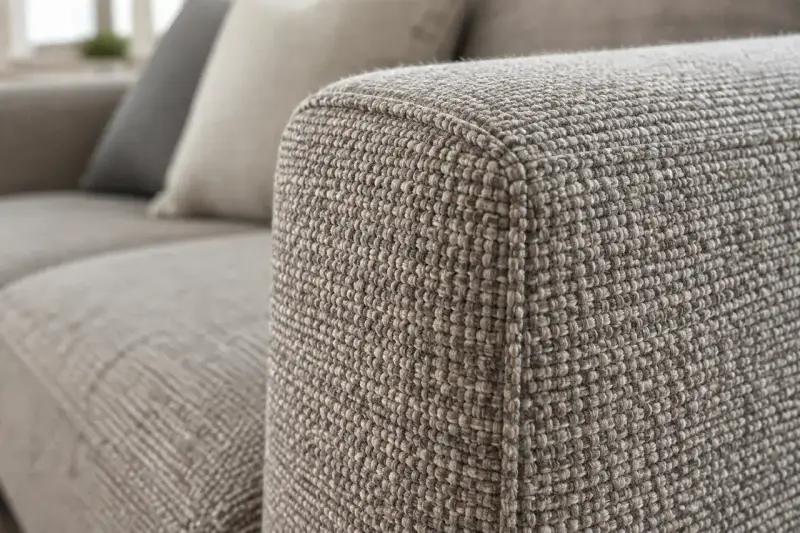
Microfiber is a synthetic fabric, usually polyester, nylon or a blend, woven from very fine fibers. That tight weave is why it resists spills and why it’s a common choice for family-room sectionals around West Covina and the rest of the San Gabriel Valley.
Being synthetic doesn’t make it water-safe. Many microfiber couches carry an S code, meaning solvent only, and plenty of others are W or WS. The tag is usually under the seat cushions or on the deck beneath them. Our guide to upholstery cleaning codes W, S, WS and X shows where else to look and what each letter allows.
If you can’t find a code, treat the couch as S until you know otherwise.
How do you clean a microfiber couch step by step?
- Find the code. It decides everything after this step.
- Vacuum the whole couch. Use the upholstery tool on the cushions, arms and back, and the crevice tool along the seams. Dry crumbs and grit turn into mud the moment liquid touches them.
- Test in a hidden spot. Try your cleaner on the back of a skirt or the underside of a cushion. Let it dry completely and check for color transfer, rings or a change in texture before going near anything visible.
- Put the cleaner on the cloth, not the couch. For W or WS fabric, use a water-based upholstery cleaner. For S fabric, use a solvent cleaner labeled for S fabrics, with the windows open. Use a white cloth so no dye transfers.
- Blot and work from the outside in. Press and lift rather than rub. Rubbing frays the fine fibers and spreads the spot outward.
- Feather the edges. Lightly dampen a wider area around the spot so there’s no hard line between the cleaned patch and the rest of the cushion. On W fabric, cleaning a cushion panel seam to seam gives the most even result.
- Dry it fast. Point a fan at the area. Quick drying is the best protection against rings.
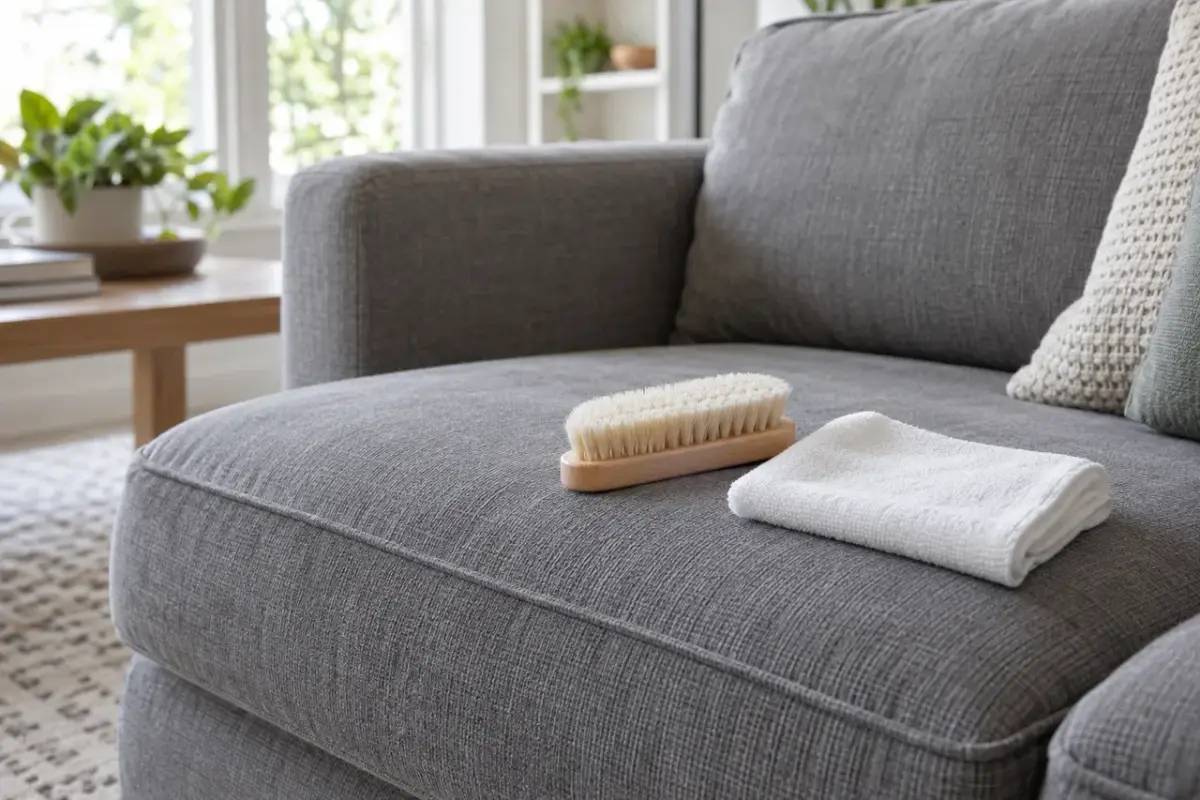
- Brush the nap when it’s dry. A soft brush moved in small circles lifts the fibers so the cleaned area doesn’t look flat or darker than the rest.
What about rubbing alcohol?
You’ll find rubbing alcohol recommended all over the internet for S-coded microfiber. It can work because it evaporates before it has time to leave a ring. It’s also not a product made for upholstery, it can move some dyes, and it’s flammable. If you try it, test first, ventilate the room, keep it away from flames, and stop at the first sign of color on your cloth. A solvent cleaner made for S fabrics is the safer choice.
Why does microfiber get water rings, and can you fix them?
A water ring forms when the wet area dries from the outside in. As it dries, water wicks toward the edge and carries dissolved soil, body oil and leftover cleaner with it, then drops all of it in a line where the drying stops. That’s why the ring is darker than both the cleaned spot and the untouched fabric around it. Tap water’s minerals and soapy residue make it worse.
What to do depends on the code:
- W or WS fabric. Lightly and evenly dampen the whole panel, seam to seam, with a water-based upholstery cleaner or distilled water on a cloth, blot, and dry it quickly with a fan. The goal is to dry the panel evenly so there’s no edge for soil to collect at.
- S fabric. Don’t add more water. That’s how a small ring becomes a large one. Try a solvent cleaner made for S fabrics, or call.
Some rings are permanent, particularly when the water moved the dye or changed the texture of the fabric. If two careful attempts haven’t changed it, stop.
What should you never use on a microfiber couch?
- A rented carpet machine or a soaking wet sponge. Too much water soaks into the foam, dries slowly and leaves rings, even on W fabric.
- Colored cloths, sponges or paper towels. Dye can transfer onto light fabric.
- Bleach, ammonia and all-purpose sprays. They can strip color and leave a residue that attracts soil.
- Melamine sponges and stiff brushes. They’re abrasive enough to rough up the fine fibers.
- High heat. Microfiber is usually polyester or nylon, and a hair dryer on high or an iron can flatten or glaze the pile.
- The washing machine. Zippered cushion covers often shrink or fade and then don’t fit or match.
- Scented fabric sprays on pet smells. They cover the odor without removing its source. Our guide to why your couch smells like pets explains what does work.
Common microfiber problems at a glance
| What you see | Usual cause | What to try | When to stop and call |
|---|---|---|---|
| Dark, shiny arms and headrests | Body oil and hair products | Code-appropriate cleaner, then brush the nap | It’s on every arm and the back cushions too |
| A ring around a cleaned spot | Water wicking soil to the edge | W: dampen and dry the whole panel. S: solvent cleaner only | After two careful tries, or on any S fabric |
| Fresh food or drink spill | Spill sitting on the surface | Blot right away, then clean per the code | It has soaked into the cushion foam |
| Stiff or matted patch | Cleaner left in the fibers, or dried without brushing | Blot with a barely damp cloth (W only), dry, brush | The texture doesn’t come back |
| Pet accident | Urine in the fabric and foam | Blot, don’t soak, skip scented sprays | Right away; urine reaches the foam fast |
When should you call a professional?
Call when the couch is dingy all over rather than spotted, when the arms and headrests have gone dark, when you have rings you can’t even out, when the code is S or X and the stain is more than a small spot, or when a pet has had an accident that reached the cushion foam.
We check the code, test a hidden spot, and choose a method the fabric tolerates: hot-water extraction for fabrics that can take water, a low-moisture method for those that can’t. Then we groom the fabric so it dries evenly. Upholstery usually dries in about 4 to 8 hours. What cleaning can’t change is wear: pilling, thinning on the arms and pile flattened in a favorite seat stay after cleaning, and we’ll say so before we start.
How often a microfiber couch needs a professional cleaning depends on how hard it works; our guide to how often to clean a sofa by fabric type has a schedule.
Before you call
Take a photo of the whole couch, the worst spot and the cleaning tag. Text them to (626) 260-6256 or call (800) 794-9241. We answer 24 hours a day, 7 days a week, and evening and weekend appointments are available by phone. You can also request a time online. More on how we clean sofas, sectionals and recliners is on our upholstery cleaning page.