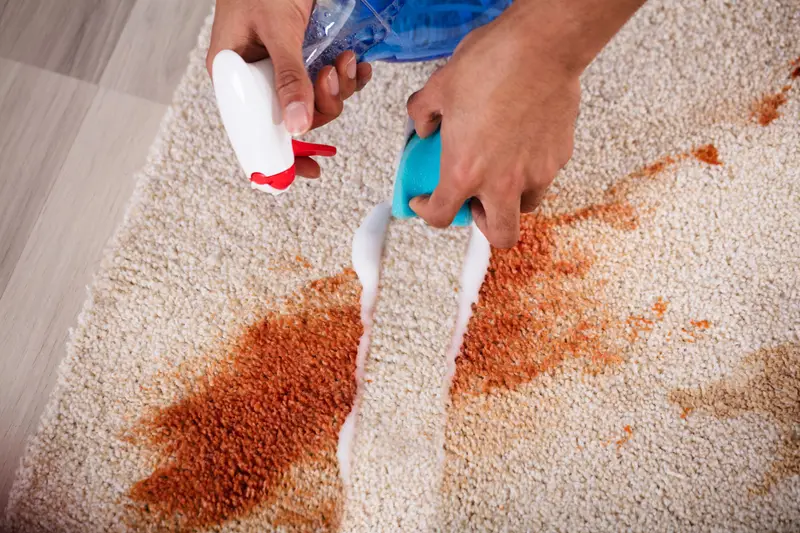
To get blood out of carpet, use cold water and nothing warmer. Blot up as much as you can with a white cloth, mist the spot with cold water and blot again, then dab on a few drops of clear dish soap mixed into a cup of cold water. Rinse with plain cold water and blot until the cloth comes up clean. Fresh blood usually comes out completely this way; dried blood takes more rounds.
Why does hot water set a blood stain?
Blood is mostly protein. Heat changes the shape of those proteins and makes them cling to the fiber, the same way an egg white turns solid in a pan. Once that happens, water can’t carry the stain back out. That’s why hot water, steam and a hair dryer are the wrong tools here. Cold water keeps the protein loose enough to rinse away.
How do you get fresh blood out of carpet?
- Blot, don’t rub. Press a white cloth or plain paper towel straight down and lift, turning to a clean section each time.
- Work from the outside in. Mist cold water around the edge first, then toward the center, so the stain doesn’t grow.
- Add a mild soap. Stir a few drops of clear dish soap into a cup of cold water and test it on a hidden spot, such as inside a closet. Dab it on, wait a minute and blot.
- Rinse. Mist with plain cold water and blot. Soap left in the pile attracts dirt.
- Dry it. Press a folded towel onto the spot, then let it air-dry.
What about dried blood?
Gently scrape off any crust with a dull knife and vacuum the flakes. Then lay a wrung-out cold, wet cloth on the spot for five to ten minutes to rehydrate it, and start the blotting steps above. Expect several rounds.
Hydrogen peroxide is often suggested for old blood. It breaks blood down, but it can also bleach carpet dye. If you try it, test it on a hidden spot and let the test dry first; on anything but white synthetic carpet, we’d call instead.
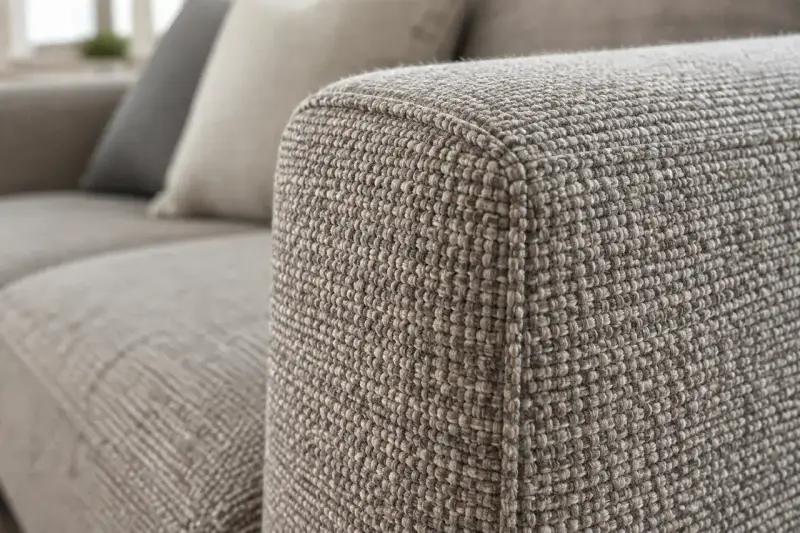
How do you get blood out of a couch?
Check the cleaning code under the cushions first; our guide to upholstery cleaning codes explains each letter.
- W or WS: the same cold-water method, with as little liquid as possible so nothing soaks into the foam.
- S: water can leave a ring, so blot only and call.
- X: blot only; no water and no solvent.
- Leather: wipe with a cloth barely dampened with cold water and dry it right away.
What’s different on a wool or natural-fiber rug?
Wool is itself a protein fiber, so products made to break down protein stains can damage it, and hydrogen peroxide can strip its dye. Use cold water only, as little as you can, with a towel slid underneath if the rug lifts. Cotton, jute and sisal brown easily when wet, so blot more and wet less. On a hand-knotted or viscose rug, blot it dry and send us a photo first.
What if the stain is still there or comes back?
A faint brown ring after drying usually means blood soaked deeper than the surface and wicked back up as the carpet dried. Repeat the cold-water rinse, then leave a folded towel on the spot under something heavy for an hour to draw the moisture up. Why carpet stains come back after cleaning explains how wicking works. If the shadow survives two rounds, more product tends to make the spot bigger, not lighter.
Blood stain help in West Covina
Buyher’s is a family-owned carpet and upholstery cleaner based in West Covina, working across the San Gabriel Valley since 1987. On a stubborn spot, our carpet cleaning pre-treats the stain, then rinses the area with truck-mounted extraction, using eco-friendly products that are safe around kids and pets. Text a photo of the spot to (626) 260-6256 for a free quote, or call (800) 794-9241; the phone is answered 24 hours a day.