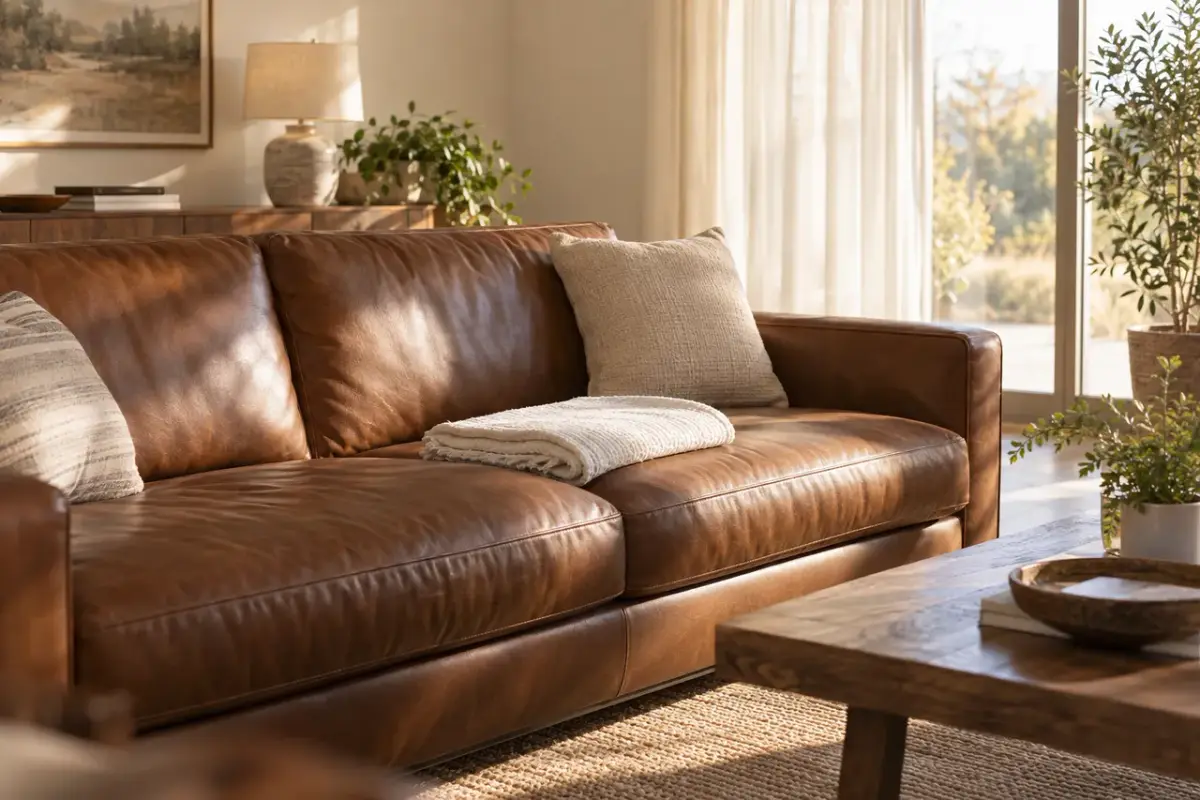
To clean a leather couch, vacuum the seams and crevices, wipe the surface with a soft cloth that’s dry or barely damp with distilled water, and when it’s actually soiled, use a cleaner made for leather, tested on a hidden spot first. Condition it as the manufacturer recommends, keep it out of direct sun, and blot spills right away instead of rubbing them. Skip household cleaners, vinegar, baby wipes and kitchen oils entirely.
How careful you need to be depends on the kind of leather, so start there.
What kind of leather is your couch?
Most leather furniture falls into one of a few types. The tag, the receipt or the maker’s product listing will often tell you. If not, a single drop of water on a hidden spot, such as the back of the couch near the floor, is a quick check.
| Type | How it looks and feels | Water-drop check | What it means for cleaning |
|---|---|---|---|
| Protected (pigmented) | Even color, slight sheen, uniform surface | Beads up and sits on top | The most forgiving; a coating takes most of the wear |
| Semi-aniline | Natural grain visible under a light finish | Usually beads, may slowly soak in | Some protection; still test everything |
| Aniline | Very soft, natural marks and pores, no coating | Soaks in and darkens the spot | Absorbs water and oil; blot only, call for stains |
| Nubuck and suede | Velvety, napped surface | Soaks in quickly | Needs nubuck or suede products only |
| Bonded leather | Uniform look, often on budget furniture | Usually beads | Prone to peeling; cleaning can’t stop it |
If the drop soaks in, blot it straight away with a dry cloth. On most aniline leather it dries back without a mark, which is why you test somewhere nobody will see.
How do you clean a leather couch routinely?
- Vacuum first. Use the soft brush attachment along the seams, the crevices between cushions and the folds of the arms. Grit in those creases acts like sandpaper on the finish every time someone sits down.
- Dust with a dry cloth. A soft, clean microfiber cloth once a week keeps dust from settling into the grain.
- Wipe when it looks dull. A cloth barely damp with distilled water, wrung out until it’s almost dry, lifts the light film from hands and arms on protected leather. Dry the area with a second cloth. On aniline leather, stick to a dry cloth.
- Use a leather cleaner for real soil. Choose one made for your type of leather, follow its label, test it on a hidden spot, and work one section at a time. Wipe off any residue.
- Condition as the maker recommends. Conditioner keeps leather from drying out, but more isn’t better: too much leaves a sticky surface that holds soil.
- Let it dry on its own. No hair dryers and no space heaters pointed at it.
What should you do when something spills on leather?
Blot first, always. Press a clean, absorbent white cloth on the spill and lift. Rubbing pushes liquid into the grain and spreads it.
- Water, soda, coffee or juice. After blotting, protected leather can take a wipe with a barely damp cloth, then a dry one. On aniline, blot only and let it dry evenly; a damp patch often fades as it dries.
- Grease, lotion or food oil. Blot, and don’t add water, which spreads oil. On protected leather, a leather cleaner usually lifts it. On aniline, oil soaks in fast; leave it alone and call.
- Ink and marker. Don’t try alcohol, hairspray or nail polish remover. They can strip the finish and spread the ink at the same time.
- Denim dye on light leather. Blue transfer from jeans is common on pale couches. On protected leather, a leather cleaner used early has the best chance. Left for months, it can set.
- Pet urine. Blot thoroughly, wipe protected leather with a cool, barely damp cloth, and call soon. Urine can damage the finish and color if it sits, and it can reach the cushion filling through the seams.
What should you never use on a leather couch?
- All-purpose sprays, glass cleaner, ammonia and bleach. They can dry out leather and damage the finish.
- Vinegar. It’s an acid, and home remedies that mix it with oil leave leather worse off, not better.
- Baby wipes and makeup wipes. Convenient, but they leave behind ingredients that aren’t meant for leather finishes.
- Melamine sponges. They’re a fine abrasive and can rub through the protective coating.
- Saddle soap. It’s made for saddles and tack, and can be too harsh for furniture finishes.
- Olive oil, coconut oil and other kitchen oils. They can darken leather, turn rancid and attract soil.
- Furniture polish with silicone or wax. It builds a film that makes later cleaning harder.
- Steam cleaners and soaking water. Leather isn’t fabric, and water in quantity can stain and stiffen it.
How do sun and heat affect a leather couch?
Direct sun fades leather and dries it out, and in a San Gabriel Valley summer, a couch under a west-facing window takes a lot of it. Heat from vents, fireplaces and space heaters does the same thing faster. If you can, keep leather out of direct afternoon sun, use blinds or UV-filtering window film, and leave a little space between the couch and any heat source. Rotating seat cushions, where they’re removable, spreads wear more evenly too.
When should you call a professional?
Call when the headrests, arms and seat fronts have darkened from body oil and a leather cleaner hasn’t shifted it, when you have aniline or nubuck and any kind of stain, when you’re not sure what type of leather you have, or when a pet has had an accident on it.
We clean leather sofas, chairs and recliners with products made for leather, not fabric methods, so mention leather when you book and we’ll bring the right ones. See leather furniture cleaning for how it works.
It’s worth being clear about what cleaning doesn’t do. It removes soil, oil and many stains. It doesn’t repair cracks or tears, stop bonded leather from peeling, or bring back color that has faded or worn through. Those are jobs for a leather repair and refinishing specialist.
For how often leather needs a professional cleaning compared with fabric, see how often to clean a sofa by fabric type.
Before you call
Take a photo of the whole couch, a close-up of the worst area, and the tag if there is one. Text them to (626) 260-6256 or call (800) 794-9241; we answer 24 hours a day, 7 days a week. If you have fabric furniture to do on the same visit, our upholstery cleaning page covers that side, and you can request a time online.