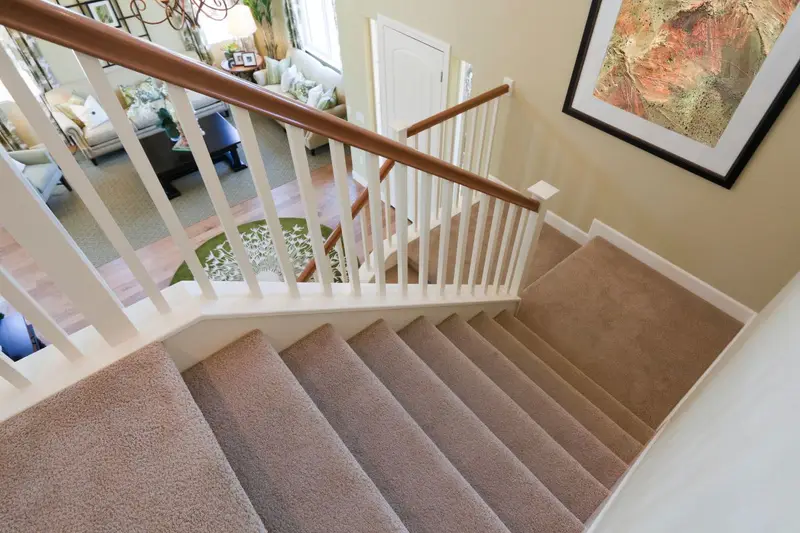
To get soot or ash out of carpet, keep it dry and keep your hands off it. Let fireplace ash go completely cold, then vacuum with the hose nozzle held just off the fibers, so it pulls the particles up without pressing them in. Lift what’s left by pressing a dry soot sponge onto it. Only then blot any gray shadow with a few drops of dish soap in cool water, after testing a hidden spot, and rinse. Rubbing or wetting it first is what turns a small spill into a stain.
Why does soot smear so easily?
Soot is unburned carbon in extremely fine, slightly oily particles, the same black that coats the inside of a chimney or a candle jar. Wood ash is coarser and mostly mineral, but it carries soot with it. Both are far finer than ordinary dirt. Press on them and they work down between the fibers; add water and the carbon spreads like ink. That’s why a footprint through a fireplace spill is harder to fix than the spill itself.
Ash from a fireplace can also hide live embers long after the fire looks out, and the inside of a vacuum is the wrong place for one.
How do you get soot and ash out of carpet?
- Wait until it’s cold. If there’s any doubt, give it more time, and keep people and pets from walking through it.
- Pick up large pieces by hand or with a sheet of stiff paper slid underneath. Don’t sweep across the carpet.
- Vacuum without contact. Use the hose with a narrow nozzle and hold it just above the pile, working from the edges in. Keep the beater bar off the spot.
- Use a dry soot sponge. Press it straight onto the dark area and lift. Turn to a clean face each time; wiping smears.
- Then go wet, sparingly. Test a few drops of dish soap in a cup of cool water on a hidden spot, then blot it onto any remaining shadow. Rinse with plain water and blot dry.
Is it different on a couch or a rug?
On upholstery, vacuum with the brush attachment held just off the fabric, then use the dry sponge. Check the cleaning code before the wet step: W and WS fabric can take the dish soap blot with a barely damp cloth, while S and X fabric should stop after the dry steps.
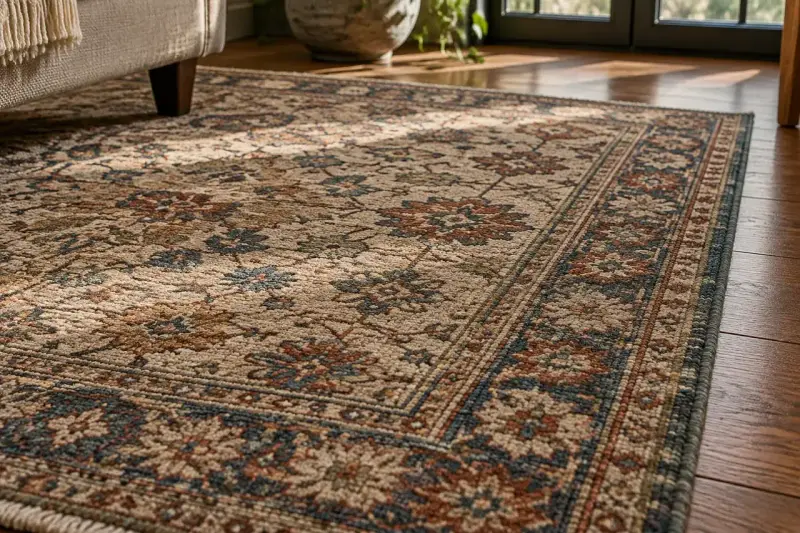
A small wool or natural-fiber rug can be carried outside and shaken gently, or turned over and tapped on the back, to drop loose ash. Vacuum with suction only, no brush roll, and skip the wet step on silk and viscose, where water leaves a mark of its own. Checking what your rug is made of tells you which one you have.
What about candle soot and wildfire ash?
Candles leave soot gradually rather than in one spill. It collects with dust along baseboards and under closed doors as gray or black lines, and this guide explains how filtration lines form. They need a professional treatment, and older ones don’t always come out completely.
Wildfire ash across a home is a different job from a spill on the hearth. For ash cleanup, the EPA advises an N95 respirator and gloves, a HEPA-type vacuum, and avoiding anything that stirs ash into the air, such as dry sweeping. This page covers spots and spills, not smoke through a whole house.
What if a gray shadow remains?
After dry removal and one round of blotting, stop. More water and scrubbing spread the carbon outward and leave a larger, fainter ring. A professional pre-treatment followed by hot-water extraction rinses out the oily residue that holds the shadow in place; our carpet cleaning page explains how that works.
Fireplace season in the San Gabriel Valley?
Buyher’s is family-owned and based in West Covina, cleaning carpet, upholstery and rugs since 1987. Text a photo of the spot to (626) 260-6256 for a free quote, or call (800) 794-9241 any hour.