If you have light-colored carpet, you’ve probably noticed darker paths forming where everyone walks: down the hallway, up the stairs, and just inside the front door. These traffic lanes are common in San Gabriel Valley homes, and they’re largely preventable. Stop grit at the door with mats and a shoes-off habit, vacuum the main paths more often than the rooms, and have the lanes cleaned before the soil has time to wear the fiber.
This guide explains why those areas go first, why light carpet shows it sooner, and what to do both before lanes appear and after they’ve set in.
What traffic lanes are
Traffic lanes are the darker, duller paths on carpet caused by constant foot traffic. Over time the fibers in those paths lie flat, collect oils, trap fine dirt, and lose their color contrast with the carpet around them.
They usually show up in the same places:
- Hallways
- Staircases and landings
- Entryways and the doorway into the family room
- Paths to the kitchen and bedrooms
- Around the edges of sofas and chairs
Why hallways, stairs and entryways go first
Everyone walks the same path. Carpet wears where feet go, and in most homes the traffic funnels through a few chokepoints: the entry, the main hallway, and the stairs. Those strips may see many times the footsteps of a bedroom corner, and all that traffic concentrates soil and pressure into narrow lanes.
Entryways get the soil first. Grit, oily residue from driveways and streets, and the fine dust of a dry Southern California climate come in on shoes, and the first few feet inside the door catch most of it. That soil is abrasive as well as dirty: it grinds against the fibers like sandpaper with every step.
Stairs take concentrated pressure. Every step lands on the same small tread, and the front edge of each stair gets crushed and scuffed as feet push off it. On many staircases the edges look worn before anything else in the house.
Why light-colored carpet shows it sooner
Light carpet doesn’t wear faster than dark carpet. It just hides less:
- There’s no color to hide soil. Dark and multi-tone carpets camouflage everyday dirt; beige, cream and light gray show it almost right away.
- Oily film holds the dirt. Skin oils, cooking residue and the oily film tracked in from outside coat the fibers, and that sticky layer grabs dust with every step.
- Crushed fibers reflect light differently. Where the pile is flattened, it catches light unevenly and looks darker and duller than the carpet around it, even before it’s truly dirty.
- Fine grit dulls the fiber. Sand and dust ground in by foot traffic scratch the fibers so they lose their sheen over time.
Why vacuuming isn’t enough in a lane
Vacuuming picks up loose, dry soil from near the surface, and you should keep doing it. But the fine, oily soil bonded to the fibers in a traffic lane doesn’t let go for a vacuum, which is why halls and entries can look dingy even in a well-kept home.
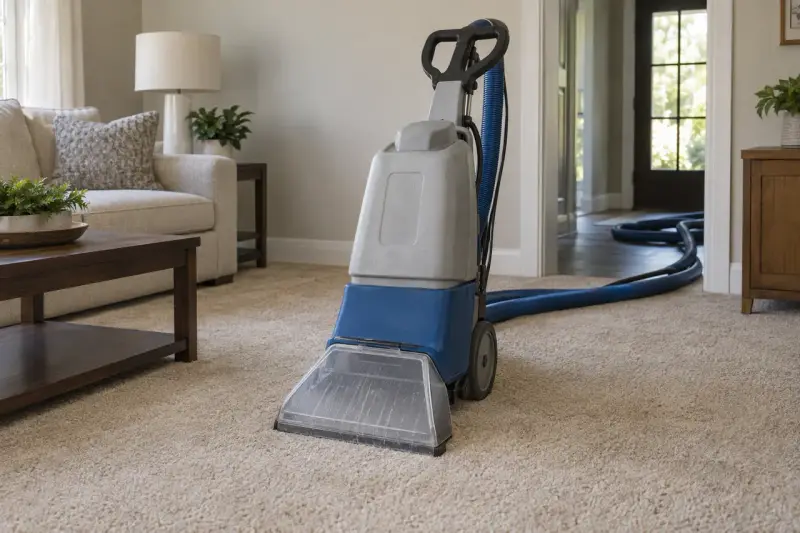
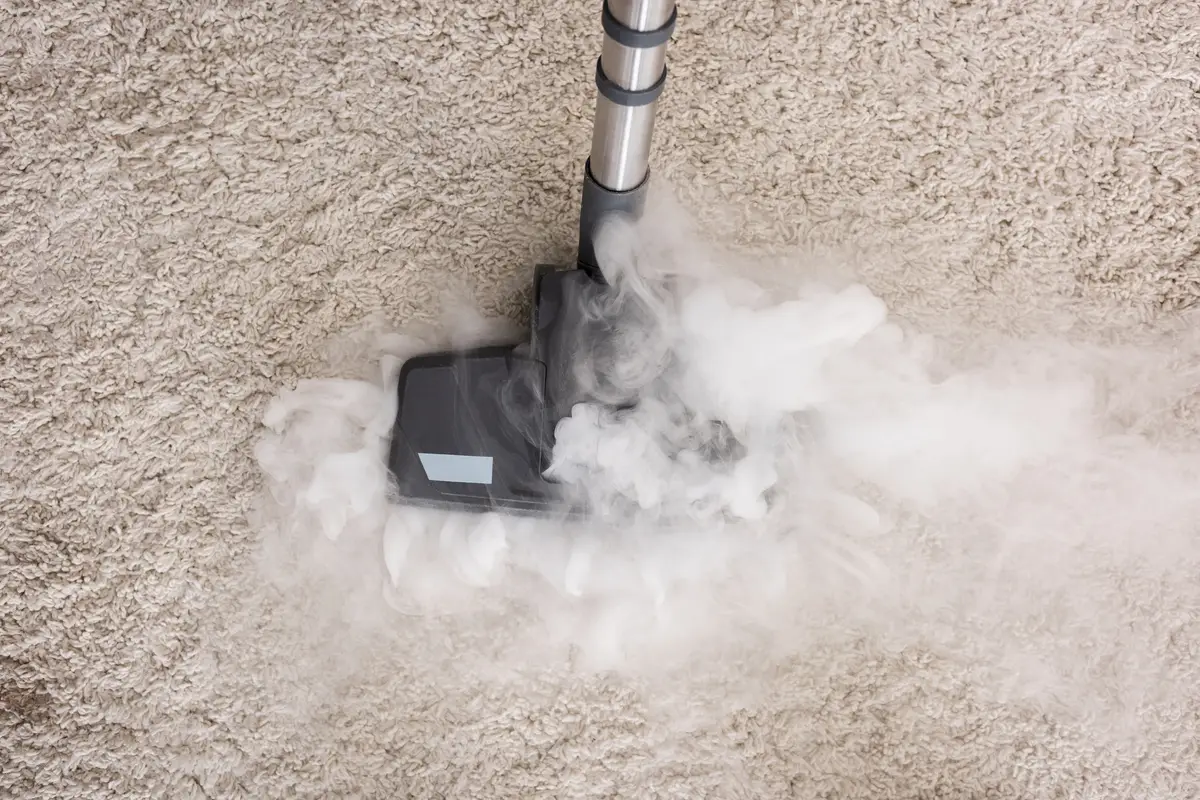
Getting it out takes two steps: a pre-conditioning treatment that breaks the bond between the oily film and the fiber, then hot-water extraction to rinse the loosened soil out of the carpet. Our high-traffic carpet cleaning is built around exactly that.
How to prevent traffic lanes
You can’t stop your family from walking on the carpet, but you can slow down how fast the paths appear:
- Use walk-off mats at every entry, both outside and inside the door, so grit is caught before it reaches the carpet.
- Go shoes-off or use house shoes. Outdoor soles carry the oily street soil that causes most dark lanes.
- Vacuum by traffic, not by room. Vacuum the entry and main hallway a few times a week with slow passes in more than one direction, give the stairs their own regular pass, and do the bedrooms less often.
- Put runners or area rugs in hallways and on the paths you can’t avoid walking.
- Rearrange furniture now and then so the same strip of carpet isn’t taking every step.
- Blot spills right away instead of scrubbing, and skip DIY cleaners that leave sticky residue behind.
- Add a protector after cleaning. Carpet stain protection such as Scotchgard makes it harder for oily soil to bond, so more of it comes out with routine vacuuming.
- Clean the lanes on their own schedule. Having just the hallways, stairs and entry professionally cleaned between whole-home cleanings keeps the busiest areas from falling behind the rest of the carpet, so it ages evenly.
When lanes have already formed
If your hallway, stairs or family room already show darker paths, a professional cleaning can often lift much of the discoloration and bring back a more even look.
Timing matters, though. The longer soil sits in a lane, the more it wears the fibers, and wear that has already damaged the pile can’t be fully reversed. Cleaning removes soil; it can’t rebuild fiber that has been abraded or crushed flat. We’ll tell you which you’re looking at before we start, so you know what to expect.
Serving West Covina and the San Gabriel Valley
Two-story homes in West Covina and the hillside neighborhoods of Diamond Bar send the whole household up and down one staircase, and the stairs and upstairs hallway usually show it first. Keeping those areas on their own cleaning schedule protects the rest of the carpet.
Call Buyher’s Carpet & Upholstery Cleaning at (800) 794-9241 or text a photo of the lane to (626) 260-6256. We’re open 24 hours, 7 days, and have been cleaning carpet across the San Gabriel Valley for more than 38 years. More on our high-traffic carpet cleaning page.