Motor oil and tar come out of carpet in three stages: remove the solid part while it’s dry, dissolve the oil with a solvent, then wash the solvent out. Scrape off tar (hardened first with ice if it’s soft), soak fresh oil up with cornstarch or baking soda, test a carpet-safe solvent spot remover on a hidden spot, and dab it on with a white cloth. Finish by blotting with dish soap in cool water, then rinse. Water on its own won’t touch either one.
Why do driveway stains behave the way they do?
Both are petroleum. Motor oil stays liquid and keeps creeping along the fibers. Tar, asphalt and driveway sealant are thick and sticky, and they harden as they cool. Neither mixes with water, so wet scrubbing only pushes them around. Both also hold onto dirt: a spot you thought was gone turns gray again as foot traffic adds soil to the oil left in the pile.
Most of it rides in on shoes. Oil drips on the garage floor, fresh street patches and newly sealed driveways (softer on a hot San Gabriel Valley afternoon) leave black specks on the first few feet of carpet. When the specks become a gray path, the problem is oily soil across the whole lane, and keeping traffic lanes from forming starts at the door.
How do you get motor oil and tar out of carpet?
- Scrape first. Hold a bag of ice on soft tar for a few minutes until it firms up, then lift it with a dull knife or a spoon. Scrape thick oil from the edges in.
- Absorb fresh oil. Sprinkle cornstarch or baking soda, leave it 15 to 20 minutes, and vacuum it up thoroughly.
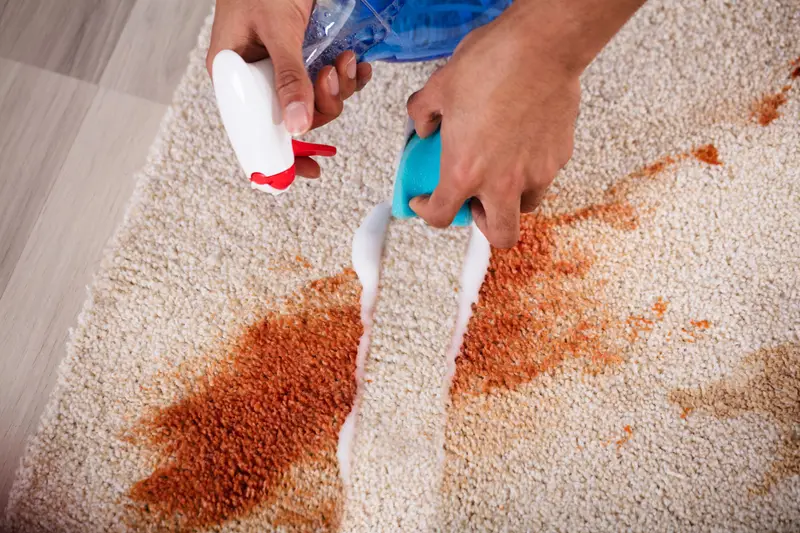
- Test a solvent. Use a solvent spot remover labeled for carpet and for grease or tar. Open a window, put a few drops on a white cloth, press it into a hidden spot, and check for color loss or a change in texture once it dries.
- Dab and lift. Put the solvent on the cloth, never straight on the carpet, and blot. Turn to a clean part of the cloth each time it picks up black. Don’t let it soak down to the backing, where solvent can loosen the latex that holds the carpet together.
- Wash the solvent out. Blot with a few drops of dish soap in a cup of cool water, mist with plain water, and blot dry.
Don’t mix solvents with each other or with other cleaners, keep them away from pilot lights and flames, and keep kids and pets out of the room until the smell clears.
Is it different on a rug or a couch?
Synthetic rugs made of nylon, polyester or polypropylene take the same method. Wool and natural-fiber rugs are different: solvents can pull natural dyes, and a cotton or jute foundation browns when it gets wet. Scrape and absorb, then stop and have it treated.
Driveway grime rarely reaches upholstery, except footrests and ottomans. Check the cleaning code first. S and WS fabrics can take a solvent cleaner made for upholstery, W fabric needs a water-based cleaner such as the dish soap solution, and X means vacuum only.
What if a gray shadow is still there?
A shadow that returns within a few days is usually oil or soap residue wicking up and catching fresh soil. Why carpet stains come back after cleaning explains how to tell which. One more plain-water rinse and a firm blot may settle it; more solvent won’t.
When the whole entry path has darkened, it needs a degreasing pre-conditioning treatment on the traffic lane before hot-water extraction rinses it out. That’s how we handle oily soil tracked in from the garage and street.
Black marks by the garage door in West Covina?
Buyher’s is family-owned, based in West Covina and cleaning carpet across the San Gabriel Valley since 1987. Text a photo of the marks to (626) 260-6256 for a free, upfront quote, or call (800) 794-9241 any hour.