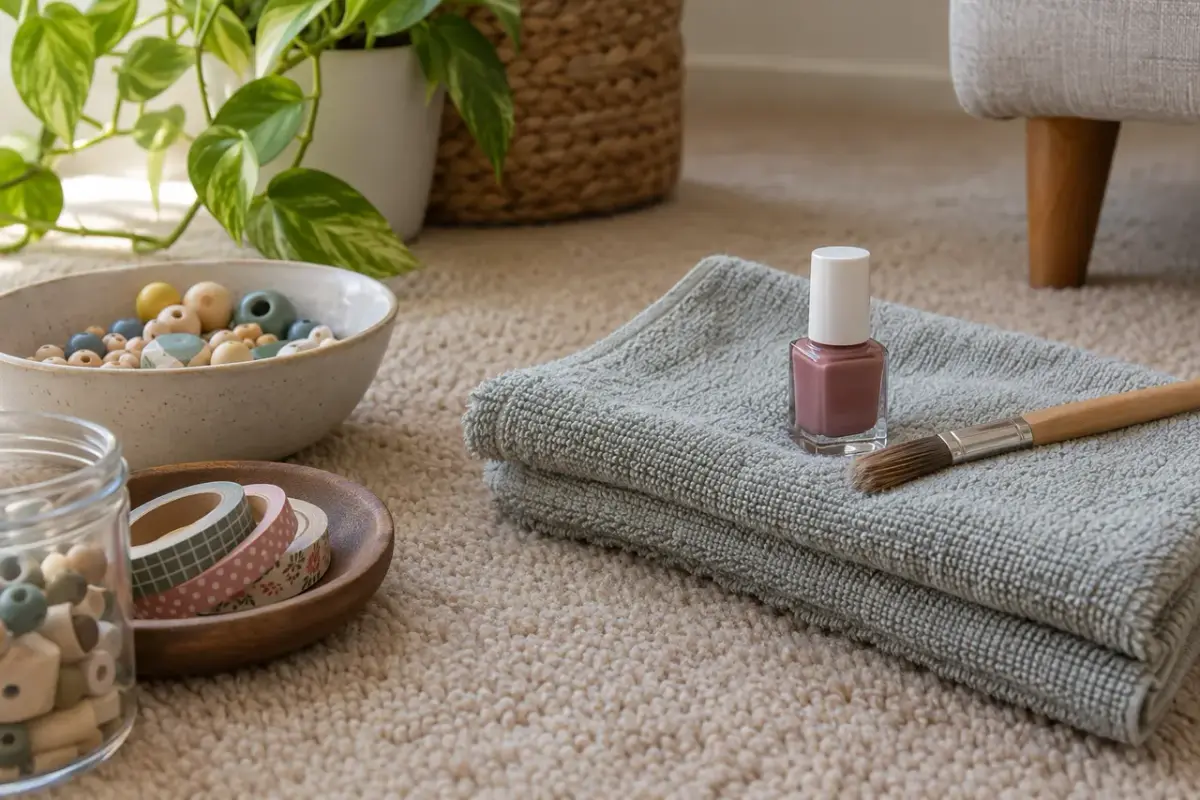
Each of these stains needs a different first move. Slime: scrape off what you can, then dab the rest with white vinegar mixed with cool water, and rinse. Nail polish: blot it while it’s wet, then dab with a non-acetone remover on a white cloth after testing a hidden spot. Wet latex or acrylic paint: scoop it up and blot with cool water and a drop of dish soap before it dries. Makeup: vacuum powders up dry, and treat foundation and lipstick as oily stains, with dish soap first and rubbing alcohol on a cloth if needed. Whatever it is, test first, use a little at a time, and blot rather than rub.
These tend to arrive with kids’ crafts, sleepovers and weekend paint projects. Here’s how to handle each one, and when to stop and call.
How do you test a cleaner on carpet first?
Do this before anything stronger than plain water touches a visible spot:
- Pick a hidden spot: inside a closet, under the sofa, or a leftover remnant if you kept one.
- Put a few drops on a white cloth, not on the carpet, and press it into the pile.
- Wait a few minutes, then look at the cloth. Color on it means the product is pulling dye.
- Let the test spot dry and look again. Lightening, fuzzing, stiffness or a melted look means stop.
Two rules hold for every product here: apply it to the cloth, never straight onto the carpet, and don’t let solvents soak through to the backing, where they can loosen the latex that holds the carpet together.
Quick reference
| Stain | First move | Then, after a test | Avoid |
|---|---|---|---|
| Slime | Scrape it up; pick out glitter | White vinegar and cool water, then a plain-water rinse | Hot water, scrubbing |
| Wet nail polish | Blot upward with a cloth | Non-acetone remover on a white cloth | Wiping, pouring remover on |
| Dried nail polish | Flake off what lifts easily | Small dabs of non-acetone remover | Acetone on an unknown fiber |
| Wet latex or acrylic paint | Scoop, then blot | Cool water with a drop of dish soap | Letting it dry, spreading it |
| Dried latex paint | Don’t pick or scrape at it | Call, or trim tips on cut pile | Scraping hard, paint thinner |
| Oil-based paint | Blot what you can | Call before trying anything | Water, soaking solvents |
| Powder makeup | Vacuum or lift with tape | Dish soap solution for a shadow | Wetting it first |
| Foundation, concealer | Scrape off the excess | Dish soap, then rubbing alcohol on a cloth | Hot water |
| Lipstick, lip gloss | Scrape off the excess | Rubbing alcohol on a cloth | Rubbing, heat |
How do you get slime out of carpet?
Slime is usually glue held together by an activator such as borax or contact-lens solution, often with dye and glitter mixed in. Mild acid loosens what holds it together, which is why vinegar works.
- Scrape up as much as you can with a spoon or a dull knife. If it’s soft and stringy, hold a bag of ice on it for a few minutes so it firms up and lifts in pieces.
- Mix about equal parts white vinegar and cool water. Dab it on with a white cloth, wait a minute or two, and blot. The slime should soften and transfer to the cloth.
- Repeat until nothing more comes up, working from the edges in.
- Rinse with plain water and blot dry, so neither vinegar nor glue is left in the pile.
- Vacuum once it’s dry to pick up loose glitter.
Brightly colored slime can leave its dye behind. If a tint remains once the spot dries, call rather than reaching for bleach.
How do you get nail polish out of carpet?
Speed matters most. Wet polish can be blotted; dried polish has to be dissolved.
- While it’s wet, blot upward with a white cloth; wiping smears it across more fibers. Lift any blobs with the edge of a spoon.
- Use a non-acetone remover on a white cloth, after the test above. Dab, lift, and turn the cloth each time.
- Follow with the dish soap solution and a plain-water rinse. Removers leave an oily film that attracts dirt if it stays in the pile.
- For dried polish, soften it with small dabs of remover and lift it with a dull edge. Patience works better than more remover.
Acetone is a stronger solvent. It can dissolve some synthetic fibers, pull dye and soften the carpet backing if it soaks in, so it’s the riskier choice. Bright red polish on light carpet often leaves a tint even after the polish is gone; that’s a call to make early.
How do you get latex or acrylic paint out of carpet?
Latex house paint and most acrylic craft paint are water-based while they’re wet and become a plastic film once they dry. The whole job is getting it out before that happens.
- Scoop up wet paint with a spoon, from the outside in.
- Blot, don’t wipe. Wiping spreads paint across a wider patch.
- Dab with cool water and a drop of dish soap, then blot. Keep the area damp while you work so the paint can’t start to set.
- Rinse with plain water and blot dry.
Dried latex paint is much harder. On cut-pile carpet, a small drip sitting only on the tips can sometimes be trimmed off with small scissors. Don’t try this on loop-pile or Berber carpet: cutting the tops off the loops leaves a fuzzy patch that stands out, and tugging at a loop can pull out a whole row. Rubbing alcohol softens some dried latex; test it and use it sparingly. Anything bigger than a few drips is worth a photo to us first.
Oil-based paint needs a solvent, and paint thinner soaked into carpet can damage the backing and leave a flammable, smelly residue. Blot what you can and call first. Washable kids’ paint and tempera usually come out with cool water and patient blotting.
If paint has ruined a large area, the realistic fix may be a patch installed by a flooring company. We clean carpet; we don’t repair or replace it.
How do you get makeup out of carpet?
- Powder (eyeshadow, blush, bronzer): don’t wet it first, because water turns pigment powder into something closer to ink. Lift it with the vacuum hose or packing tape, then use the dish soap solution on any shadow left.
- Liquid foundation and concealer are oily. Scrape off the excess, blot with the dish soap solution, rinse, then use rubbing alcohol on a white cloth for what’s left.
- Lipstick and lip gloss are wax, oil and pigment. Scrape, then dab with rubbing alcohol on a cloth. Heat melts the wax and drives the color deeper.
- Mascara and eyeliner behave like ink: rubbing alcohol on a cloth, not water.
What shouldn’t you use on these stains?
- Bleach, hydrogen peroxide and oxy cleaners, which can lighten carpet dye permanently.
- Acetone on a fiber you can’t identify, and never on wool or silk.
- Paint thinner and goo removers poured onto carpet.
- Abrasive sponges, stiff brushes and heat.
- Too much of anything. Residue left deep in the pile wicks back up as the carpet dries; why carpet stains come back after cleaning explains it.
How do you keep the next one off the carpet?
Set up slime, nails and paint at a table or on a hard floor, over a towel or washable drop cloth, with a damp rag nearby. Carpet stain protection doesn’t make carpet stain-proof, but Scotchgard buys time to blot before a spill soaks in. For coffee, wine, grease and other everyday spills, see 7 common carpet stains and how to get them out.
When should you call a professional?
- A color tint remains after the spot has dried, from slime dye, red polish or lipstick.
- Paint has dried over more than a few small drips, or it’s oil-based.
- The stain is on wool carpet or a wool rug.
- The spot got bigger or lighter after you treated it, or you’ve already tried two or three products.
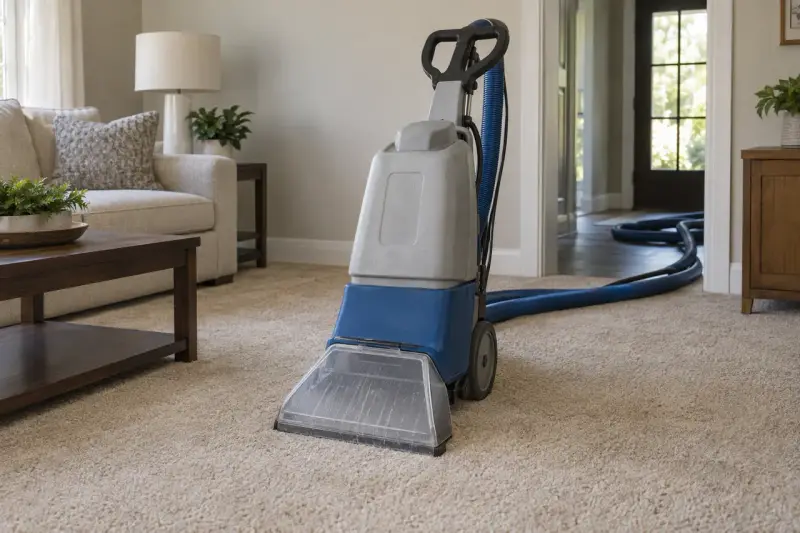
We identify the stain and the fiber, pre-treat with a spotter suited to both, and rinse it out with truck-mounted hot-water extraction, using eco-friendly products that are safe around kids and pets. Some stains come out completely; dye stains and dried paint may only lighten, and we’ll tell you which before we start. Our carpet cleaning page covers routine visits, and for a fresh mess you’d like dealt with today, ask about emergency carpet cleaning; same-day is sometimes possible when the schedule allows.
Buyher’s is family-owned and based in West Covina, cleaning carpet in Walnut and across the San Gabriel Valley since 1987. Call (800) 794-9241 any hour, or text a photo of the stain to (626) 260-6256 for a free quote.