Most carpet is dry within a few hours of a professional truck-mounted cleaning. Thick plush, stairs, heavily soiled rooms and humid or rainy days take longer; the air conditioning and fans shorten it. You can cross damp carpet right away in clean socks if you need to. Save street shoes, pets and furniture for when it’s fully dry, or set foil or plastic tabs under furniture legs if something has to go back sooner. If the carpet still feels damp the next day, something is off and it’s worth a call.
Here’s the timeline in more detail, what changes it, and how to tell when the carpet is really dry, not just dry on top.
When can you walk on carpet after it’s cleaned?
Right away, carefully. Light foot traffic doesn’t hurt damp carpet, but what’s on your feet matters:
- Clean socks or shoe covers are fine from the start. Pick one path through the room and stick to it.
- Bare feet are better kept off until it dries. Skin oils transfer easily to a freshly rinsed pile.
- Street shoes should wait until it’s completely dry. Soles press outdoor soil straight into clean, damp fibers, and a trail of footprints is the first thing you’d notice once it dries.
The one real hazard is the edge where damp carpet meets tile, wood or laminate. Damp socks on a hard floor are slippery, so warn anyone who wasn’t home when the cleaning finished.
When can furniture, rugs, pets and kids go back?
| What | When | Why |
|---|---|---|
| Walking in clean socks | Right away | Light traffic on one path doesn’t harm damp carpet |
| Street shoes | Once it’s dry | Shoes push outdoor soil into damp fibers |
| Pets and kids back in the room | Once it’s dry | Paws and play track soil onto the clean pile |
| Furniture back in place | Once it’s dry, or sooner on foil or plastic tabs | Wood stain, rust and dye from legs and bases can transfer into damp carpet |
| Area rugs back on top | Once both are fully dry | A rug traps moisture underneath, and its backing or dyes can mark the carpet |
| First vacuuming | Once it’s dry | A pass after drying lifts and evens out the pile |
| Stain protector | When we tell you | Scotchgard has to dry before it works |
Leave the tabs under the legs for a day or so even after the carpet feels dry. The spot under a heavy piece dries last, because no air reaches it.
Why does drying time vary so much?
“A few hours” holds for most homes we clean around West Covina, but several things push it one way or the other:
- Pile height and fiber. Thick plush and shag hold more water than a short, dense cut pile or a low loop. Wool holds far more than nylon or polyester and dries slowest.
- How soiled it was. Heavy traffic lanes and pet areas need more pre-treatment and more rinsing, and more rinse means more moisture to dry.
- Stairs. Each tread has carpet folded over the nose and tucked tight into the corner, with little air moving around it. Stairs are usually the last part of the house to dry.
- Weather. Our dry inland air works in your favor most of the year. Overcast June mornings and rainy winter days slow evaporation; a hot, dry afternoon speeds it up.
- Airflow. Still air in a closed room carries moisture away slowly. Moving air does it much faster.
- The slab. Many homes in the San Gabriel Valley have carpet laid over a concrete slab, so it can only dry from the top.
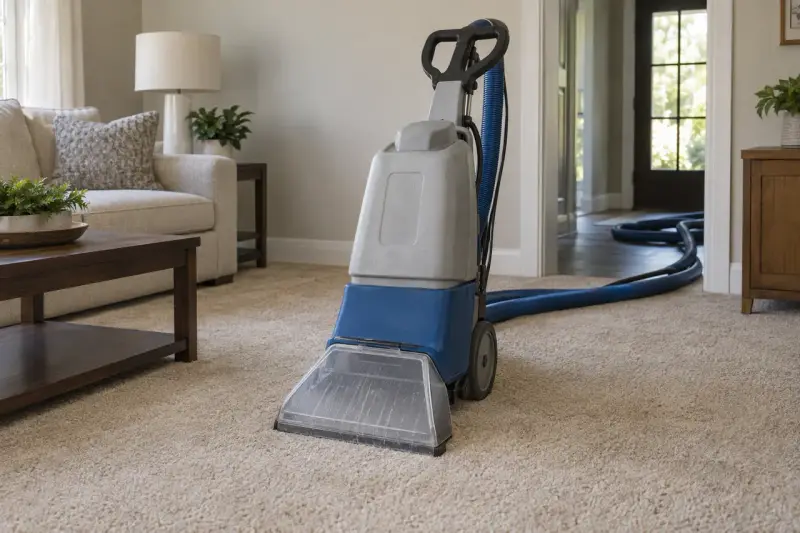
- The equipment. Truck-mounted extraction pulls most of the rinse water back out. A rental machine leaves more behind, which is why a do-it-yourself cleaning can stay damp into the next day. We compare the two in rental carpet cleaner vs. professional cleaning.
How can you speed up drying?
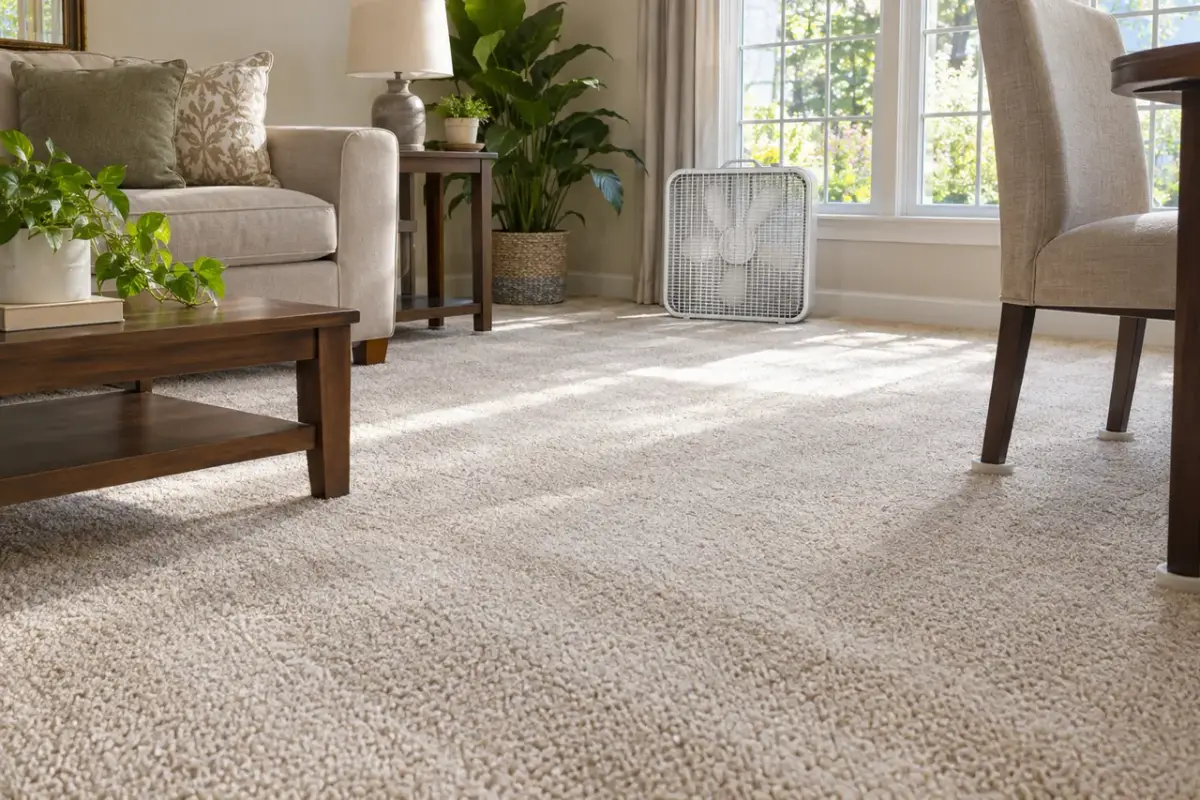
- Run the air conditioning. It moves air and pulls moisture out of it at the same time. In winter, running the heat helps too.
- Turn on ceiling fans, and aim box fans across the carpet rather than straight down at it.
- Open windows on a dry day. When it’s humid, or when Santa Ana winds are blowing dust around the foothills, keep them closed and use the AC instead.
- Open interior and closet doors so air moves between rooms instead of sitting in one.
- Keep traffic to a single path and keep furniture off until the carpet is dry.
How do you know carpet is dry all the way through?
The surface fibers dry first, so carpet can feel dry on top while the base of the pile is still damp. A few simple checks:
- Press your palm flat into the carpet for a few seconds. Damp carpet feels cool even when it doesn’t feel wet.
- Push your fingertips down to the base of the pile, where moisture lasts longest.
- Check the slow spots: stairs, corners, heavily treated traffic lanes, and wherever a large piece of furniture stood.
- Close the room up for an hour or two, then walk in. Freshly cleaned carpet should smell clean, not musty.
After a routine cleaning, a slightly damp backing finishes drying quickly. After a leak or flood it’s a different problem, because water can be held in the pad underneath; why carpet that feels dry can still be soaking wet explains how to check.
What happens if carpet stays wet too long?
Carpet that stays damp well past a day can develop problems that weren’t there before the cleaning:
- A musty smell. Damp fibers and backing in a closed room start to smell stale. Getting musty smells out of carpet covers the causes.
- Spots that come back. As carpet dries, moisture moves up the fibers and carries residue from deep in the pile with it, so an old stain can reappear at the tips. Why carpet stains come back after cleaning explains the wicking.
- Browning. A tan or brown tint can show up as an over-wet area dries, most often on older carpet with a natural jute backing.
When should you call a professional?
- The carpet still feels damp the day after a professional cleaning.
- A musty or sour smell is there after the carpet has dried.
- Brown rings or old spots show up as it dries.
- You cleaned it yourself and it stayed wet for a day or more.
- The water came from a leak or overflow, not a cleaning. That’s a job for water extraction, not more drying time.
If any of those apply after one of our cleanings, call us. If it was a rental-machine cleaning, a proper rinse and extraction usually sorts out the residue and the damp.
Planning a cleaning around drying time
- Guests, a party or a move-out walkthrough? Tell us the date and time when you book so the cleaning lands with time to dry before anyone arrives.
- Bedrooms are easiest in the morning, so they’ve had the day to dry by bedtime.
- Pets do best in a closed room, a crate, or the yard until the carpet is dry.
- Sofas and chairs take longer than carpet. Fabric upholstery usually dries in about 4 to 8 hours, so plan for the couch being out of use a little longer than the floor.
Our checklist for preparing your home for carpet cleaning covers the rest of the setup.
Carpet cleaning in West Covina and the San Gabriel Valley
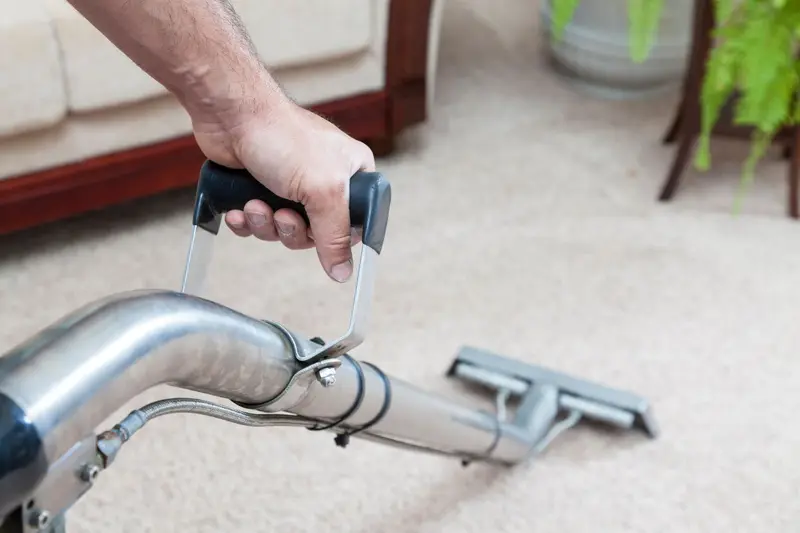
Buyher’s is a family-owned, licensed and insured company based in West Covina, cleaning carpet since 1987. Our carpet cleaning uses truck-mounted hot-water extraction, which rinses the carpet and pulls the water back out to the truck, so most rooms are dry in a few hours. We come to you across Glendora, Covina, San Dimas and the rest of the valley.
We answer the phone 24 hours a day, 7 days a week. Online booking opens about a week out; for anything sooner, call (800) 794-9241, and we’ll fit you in if the schedule allows. You can also text a photo to (626) 260-6256 for a free quote.