Nearly every tile question we get is a version of the same one: it was clean a few months ago, so why does it look like this again? The answer is almost always one property of the material, and once you know it the rest stops being mysterious.
Grout is a sponge with a hard surface
Cement-based grout — the kind in most homes — is porous. Not obviously so, but at a scale that matters: it has an internal structure of tiny voids that readily take up liquid. Tile, especially glazed tile, is effectively sealed. Grout is not.
So when something spills on a tiled floor, the tile holds it on the surface where it can be wiped away, and the grout drinks it. That is the entire mechanism. Everything else follows from it.
Why grout lines are the first thing to go
Two things compound the problem.
Grout sits lower than the tile. Liquid on a tiled floor does not stay where it lands — it runs to the lowest point available, which is the grid of grout lines. The one absorbent part of the floor is also the part everything drains into.
Grout is usually lighter than what lands on it. Most grout was originally a pale grey, beige or white. Cooking oil, shoe soil, coffee, pet accidents and mop water are all darker. There is nowhere for that contrast to hide.
Why mopping can make it worse
This one surprises people, and it is the single most common self-inflicted tile problem we see.
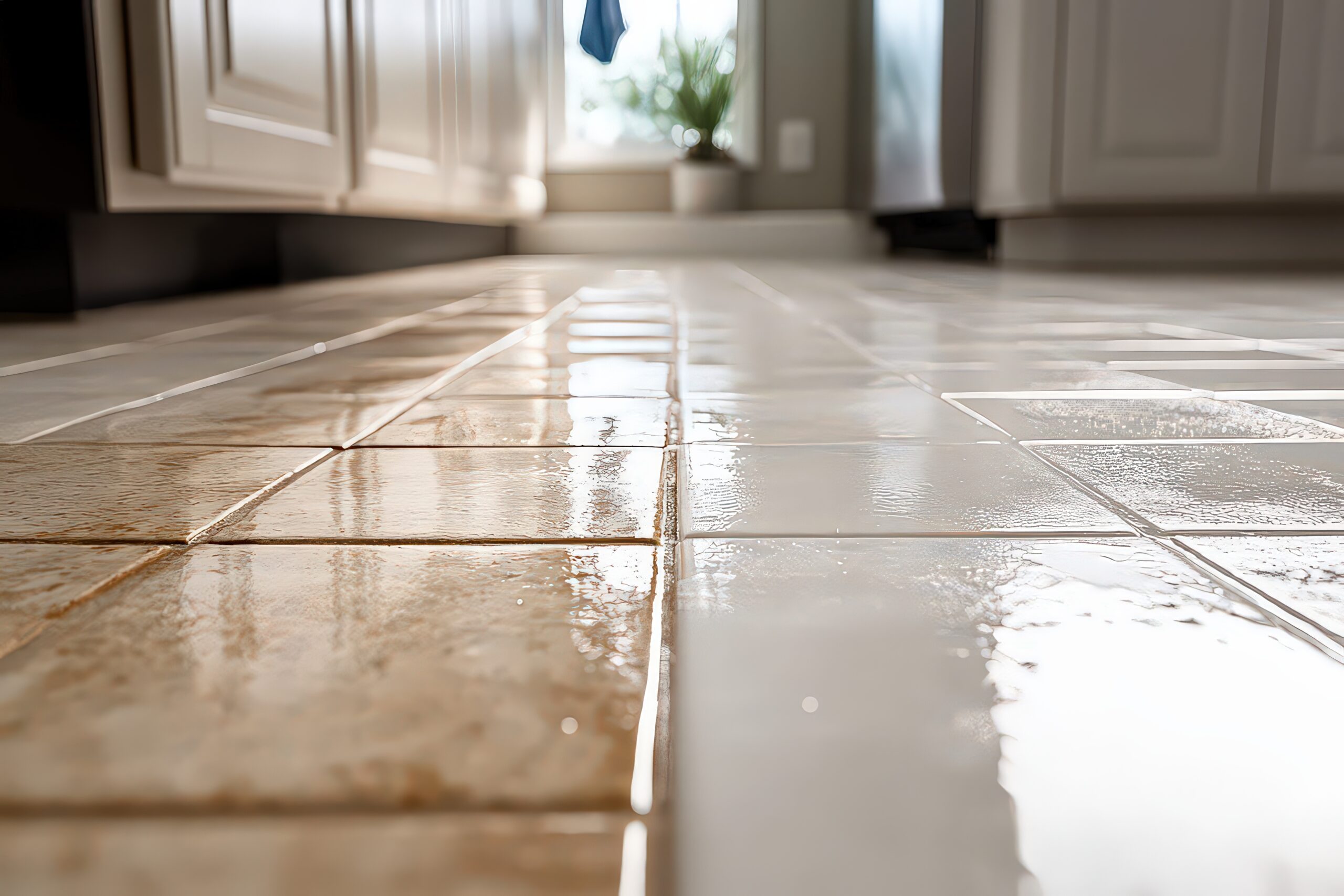
A string or sponge mop in a bucket of increasingly dirty water does not remove soil so much as redistribute it. The tile gets wiped fairly clean, because it is non-absorbent. The dirty water then runs into the grout lines and sits there while it evaporates, leaving the soil behind.
Do that weekly for a year and the grout becomes a fairly precise record of everything that has been in the mop bucket. It is not that you cleaned badly; it is that the method sends the soil to the one place it can stick.
If you mop, change the water more often than feels necessary, and use as little of it as gets the job done.
What professional cleaning actually does differently
The difference is not a magic product. It is that the soil gets removed from the building rather than moved around in it.
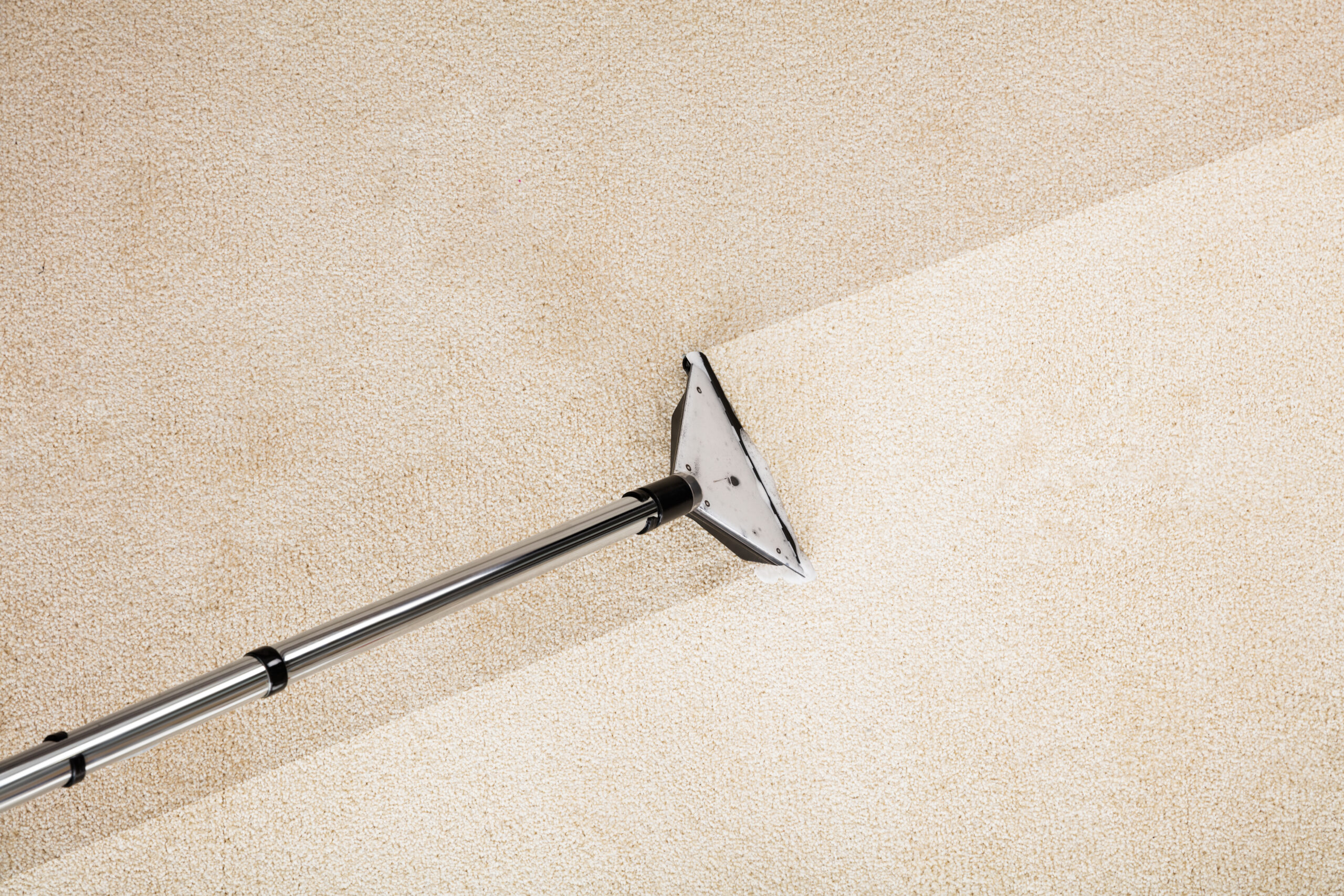
We apply a cleaning solution suited to the grout, give it time to break the bond between the soil and the material — that dwell time matters more than scrubbing force — and then extract the solution and the suspended soil under pressure, so the slurry leaves with us instead of draining back into the grout lines to dry.
That extraction step is the whole game. A rented machine or a stiff brush loosens soil perfectly well. Getting it out is the part household methods cannot do.
What sealing does, honestly
Sealer is worth having, and it is routinely oversold. Here is the accurate version:
What it does. It fills and coats the pores, so liquid beads and sits on the surface for a while instead of soaking straight in. That delay is the benefit — a spill wiped within a few minutes may leave nothing behind at all.
What it does not do. It does not make grout stain-proof. Leave red wine on sealed grout overnight and you will still have a mark. It also wears: in a hallway or a kitchen work triangle, foot traffic and cleaning abrade it away, so it needs redoing on a cycle rather than once forever.
When it makes most sense. Immediately after a deep clean, when the grout is clean and dry. Sealing over soiled grout locks the soil in, which is the opposite of what anyone wants.
Where this hits hardest locally
Two patterns come up repeatedly across the San Gabriel Valley.
Older homes with original tile. Plenty of houses near downtown Covina and across the older parts of West Covina still have their original mid-century or earlier tile. It often cleans up better than owners expect — but decades of absorption means some staining has become part of the grout body rather than sitting on it. We would rather say that up front than let you expect uniform new-looking grout.
Entry paths. Fine road grit and dry soil get tracked through the door and ground into the first few feet of floor. That is abrasive as well as dirty: it wears the sealer off fastest exactly where you most wanted it. Good entry matting does more for a tiled entry than any product you can apply to the grout itself.
What to expect from a cleaning
Substantial improvement, plainly visible, and not always uniform. Grout that has spent fifteen years absorbing in a kitchen will not come back to the same colour as grout under a dining table that nobody walks on. That difference is in the material now, not on it.
We will look at yours, tell you which parts we expect to respond well and which we think are permanent, and let you decide with real information. If we think the honest answer is regrouting rather than cleaning, we will say so — selling you a cleaning we expect to disappoint you is a bad trade for both of us.
Ready to have a look at it? Call (800) 794-9241, text a photo to (626) 260-6256, or book online. More on the service itself at tile & grout cleaning.