Office carpet should be cleaned by zone, not all at once. As a starting point, have entries, reception and the main lanes professionally cleaned about every three months, corridors about every six months, and private offices and meeting rooms about once a year. Then adjust for headcount, whether you’re at street level, and the weather your door faces.
Most offices do the opposite: they clean the whole floor on one schedule and wonder why the entrance always looks tired while the back corner looks new. Here’s why the zones differ and how to set the schedule, whether you run a small suite in West Covina or manage several floors of a building.
Why does the entrance always look worse?
Watch where people actually walk. Everyone comes through the same door, crosses the same few feet of lobby, and takes one of two routes to their desk. Most of a building’s soil is dropped in the first stretch inside the entrance: it walks in on shoes and comes off over the first several steps.
That means the carpet a hundred feet in isn’t doing anything like the same job as the carpet inside the door, and the wear pattern will show it within a year.
How often should each zone be cleaned?
Think in three zones and give each its own frequency.
Entry, reception, and the first stretch of corridor: most often. This is where the grit lands and where visitors judge the space. It’s also where wear does permanent damage, because grit is abrasive and every step grinds it against the fiber. Cleaning here is partly about appearance and largely about making the carpet last.
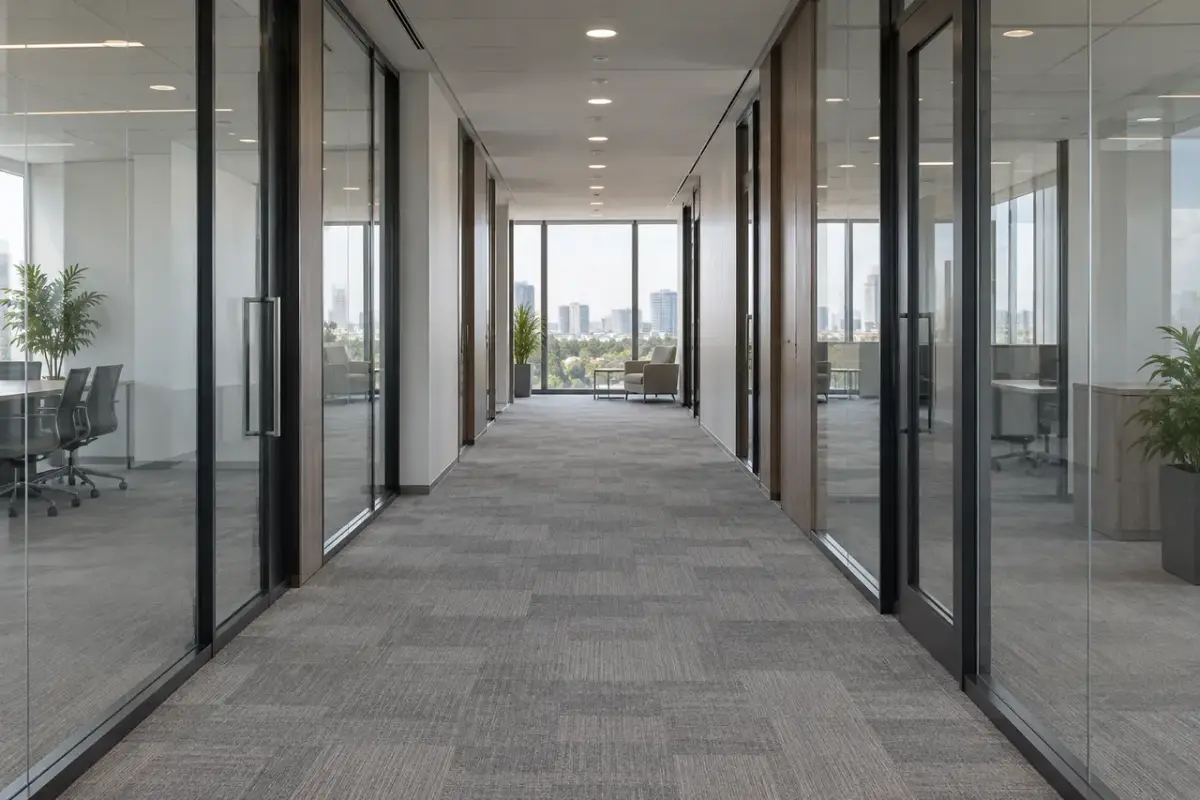
Corridors and shared routes: moderate. Steady traffic in the same direction, visible lanes, but far less soil than the entrance.
Private offices, meeting rooms, and the perimeter: least often. Genuinely light use. Cleaning these at the same rate as the entrance is money spent on carpet that didn’t need it.
As a starting point:
| Zone | What it includes | Professional cleaning | Vacuuming |
|---|---|---|---|
| Entries, reception and main lanes | The front door, lobby, check-in desk and first stretch of corridor | About every 3 months; more often for a busy street-level door | Daily |
| Corridors and shared routes | Hallways and the paths to restrooms, the break room and the copy area | About every 6 months | Twice a week or more |
| Private offices and meeting rooms | Closed offices, conference rooms and the perimeter | About once a year | At least weekly |
The right numbers depend on headcount, whether the office is at street level or upstairs, and the weather your door faces. What matters is the ratio: the entrance needs attention several times as often as the quiet rooms.
Waiting rooms and client-facing areas
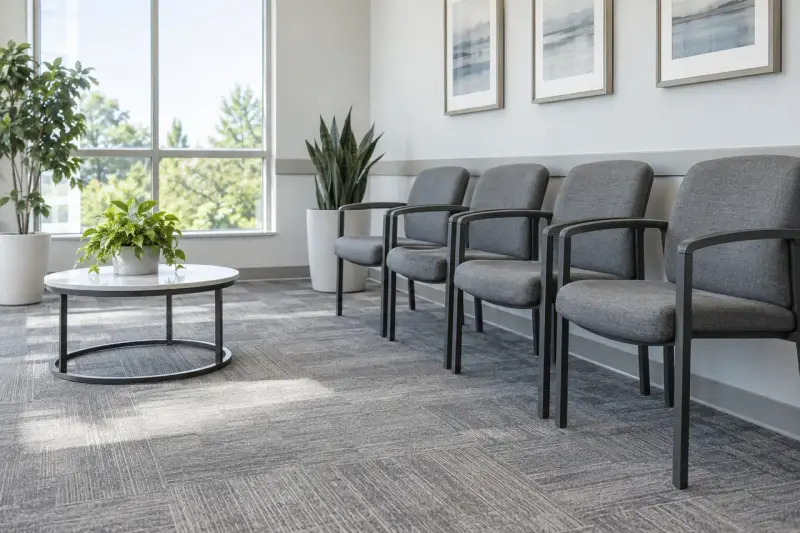
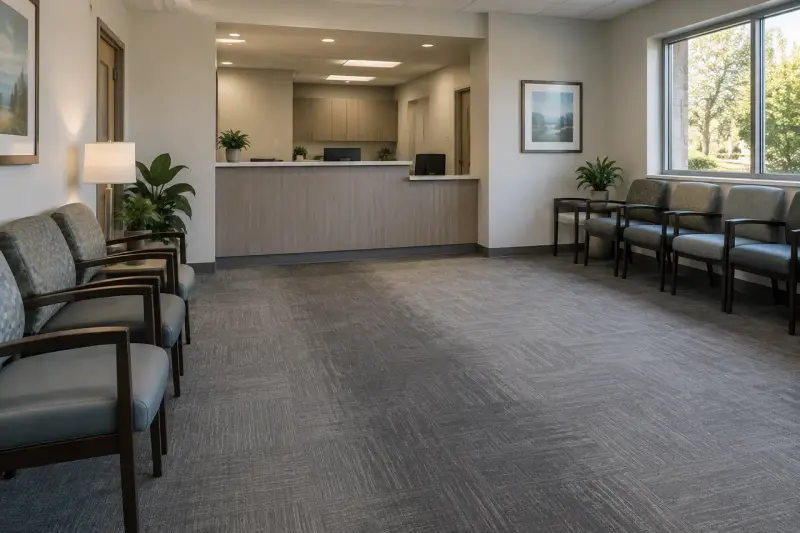
Any space customers see belongs in the most-often group, because the carpet is part of their first impression. Waiting rooms and lobbies pack a lot of traffic into a small area, and they show soil fastest. Medical, dental, and veterinary offices add wheelchairs, strollers, and carts on top of that. Our guide to carpet cleaning for waiting rooms, clinics, and offices covers those spaces, including the upholstered seating.
What should you clean between full cleanings?
Between full hot-water extractions of the whole floor, cleaning just the entry, reception, and main lanes keeps the space presentable without paying for rooms that don’t need it. Most offices do well with a full cleaning on the longer cycle and more frequent cleaning of those high-traffic areas only.
That approach puts the spending where the soil is, and the areas people judge the business by are kept up at the rate they actually need.
Spot-treat spills near break rooms and coffee stations promptly, too. A coffee ring cleaned the same week usually comes out; one left for months may not.
Adjusting for the San Gabriel Valley
A few local conditions are worth building into the schedule:
- Dry months. Long dry stretches and Santa Ana winds mean fine dust and parking-lot grit at every entrance. A street-level door facing a busy lot may need its lanes cleaned more often than every three months.
- The rainy weeks. Winter storms bring wet soil and mud onto the entry carpet. If your last lane cleaning came before the rain, consider one more once it stops.
- Your busiest season. A tax office in April or a retailer before the holidays gets much of its traffic in a few weeks. Schedule a full cleaning just before or just after that stretch, with lane cleaning in between.
The cheapest thing you can do
Proper entry matting. Not a small decorative mat, but a run long enough for several steps, so shoes are genuinely cleaned before they reach carpet. Track-off matting inside the door slows how fast the entrance soils, and it costs far less than adding cleanings to make up for a missing mat.
How can you tell office carpet is overdue?
Your carpet will tell you when it needs attention, whatever the schedule says. Watch for:
- Traffic lanes down the main aisles and around desks that are noticeably darker than the edges
- A general dullness compared with the carpet under furniture
- Coffee rings and spots that have quietly accumulated
- A stale or musty smell in enclosed rooms
People who work in a space stop noticing gradual changes; visitors see them immediately. Every so often, walk in the front door the way a first-time client would and look at the reception area and main path with fresh eyes. Catching it at the “looking tired” stage rather than the “clearly dirty” stage is easier on the carpet, because ground-in soil is harder to remove and shortens the carpet’s life.
What cleaning doesn’t fix
Worth being straight about, because it affects when replacement is the honest answer.
Wear isn’t soil. Once grit has physically worn the fiber, splitting the tips and flattening the pile, cleaning restores color and removes what’s in there but can’t rebuild what’s gone. A traffic lane at that stage will look better after cleaning and won’t look new.
Permanent staining happens, particularly from ink, some dyes, and long-standing spills that have bonded to the fiber.
With carpet tile, your flooring contractor can swap the affected tiles. That only works if spares were kept from the original installation, so check now rather than when you need them.
Buildings with rules
In a high-rise, scheduling a cleaning is partly a logistics job. Loading dock access, service elevator booking, after-hours entry, and parking all vary from building to building, and finding them out on the day of the job wastes everyone’s time.
That’s especially true in Warner Center in Woodland Hills, a high-rise district in an otherwise low-density area, and around the Van Nuys Civic Center, where courts and public offices take weekday foot traffic straight off the street. Check the building’s rules with management first, and tell us when you book so the job starts on time.
Scheduling with us
We’re based in West Covina, family-owned, and licensed and insured, and we clean offices across West Covina and the San Gabriel Valley, with San Fernando Valley offices on our route days. We answer the phone 24 hours a day, 7 days a week. If you’d rather we weren’t there during business hours, we offer evening and weekend appointments, so you don’t have to close the office; book those by phone.
Online booking opens about a week out, so plan each zone’s next cleaning when you finish the last one; for anything sooner, call. For offices on our San Fernando Valley route days, booking ahead is what secures the date you want.
Call (800) 794-9241, text a photo of the space to (626) 260-6256 for an upfront quote, or request a time online. More at commercial and office carpet cleaning and high-traffic carpet cleaning.