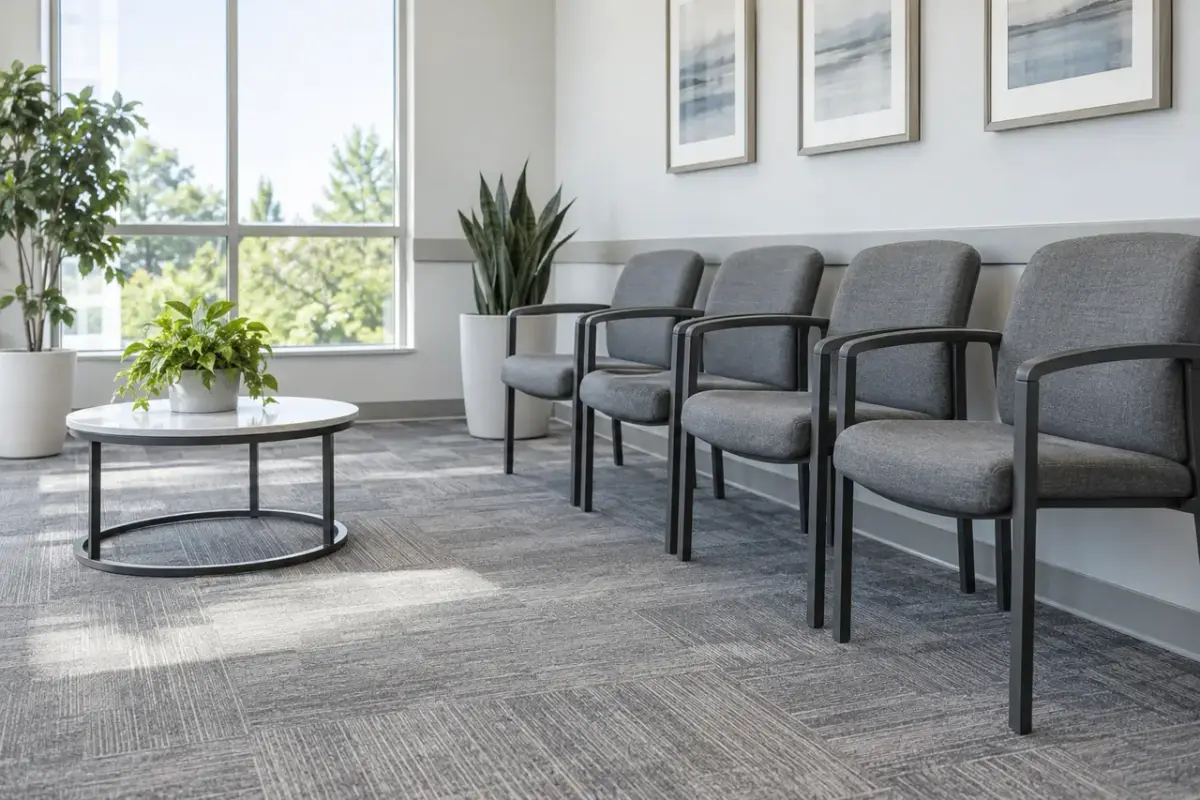
Most businesses do well with a simple rule: clean seating by how many different people use it. Waiting-room and lobby chairs with constant turnover need a professional cleaning about every 6 months. Reception, break-room and daily-use conference chairs do well every 6 to 12 months. Desk chairs used by one person need it about once a year, and light-use chairs every 12 to 18 months. In between, spills get blotted the same day, and vinyl seats get a regular wipe-down rather than a deep clean.
Here’s how to set that schedule for your office, clinic or shop in West Covina or anywhere in the San Gabriel Valley.
How often should office seating be professionally cleaned?
Use this as a starting point and adjust for what you see.
| Seating | How it’s used | Professional cleaning | What shows first |
|---|---|---|---|
| Waiting-room and lobby chairs: clinics, salons, service counters | Many different people every day | About every 6 months | Armrests, seat fronts, the top of the back |
| Reception and break-room chairs | Daily, with food and drink nearby | Every 6 to 12 months | Spots and rings on seats |
| Conference-room chairs used daily | Several people, several hours | Every 6 to 12 months | Armrests and seat centers |
| Desk and task chairs | One person, all day | About once a year | Darkened arms and the front edge of the seat |
| Boardroom, guest and private-office chairs | Occasional | Every 12 to 18 months | Dust in the seams, a dull look overall |
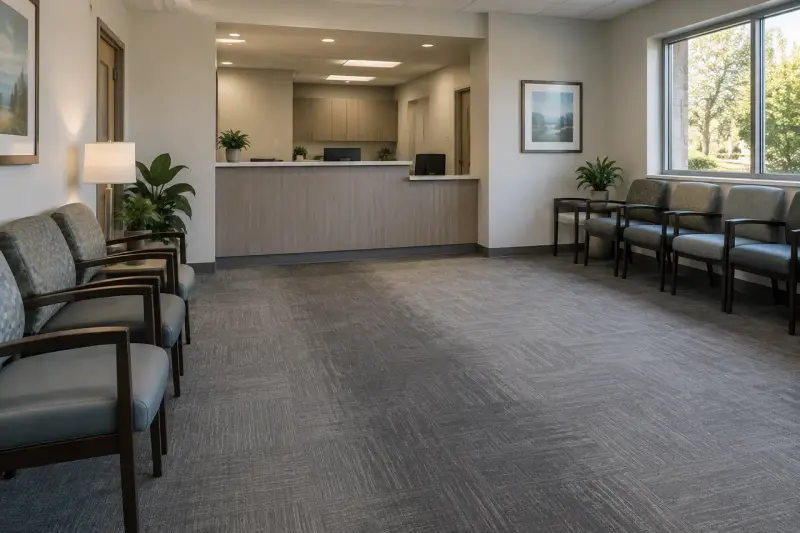
If your waiting-room carpet is on a quarterly schedule, having the chairs done on some or all of those visits keeps the room matching. A spotless floor next to darkened chairs still looks neglected, and in a waiting room people look at the seat before they sit in it.
What decides how often seating needs cleaning?
Turnover. One person in a desk chair soils it far more slowly than a steady stream of visitors soils a waiting-room chair. That’s the biggest single factor.
Food and drink. Chairs near a coffee station, a break-room table or a children’s corner collect spills that soak into the foam.
Body oil and the season. Arms, headrests and seat fronts darken from skin and hair contact, and hot San Gabriel Valley summers, with short sleeves and sunscreen, speed that up.
Color and fabric. Light fabrics show soil months sooner than charcoal ones. Some fabrics release soil easily; others hold it.
Who sees it. Customer-facing seating belongs on the shorter end of every range, because it’s part of the first impression.
What should staff do when something spills on a chair?
A small spill kit at the front desk saves a lot of chairs: a stack of plain white cloths and these steps taped inside the cabinet door.
- Blot right away. Press a white cloth or paper towel on the spill and lift. Don’t rub, which spreads it and frays the fabric.
- Check the chair’s cleaning code. Commercial seating usually has a W, S, WS or X code on a tag under the seat, or on the maker’s spec sheet. Our guide to upholstery cleaning codes explains what each one allows.
- On W or WS fabric, use a little cool water on the cloth, then blot again. Never pour water on the seat; the foam underneath holds it, and it dries into a ring.
- On S fabric, or if you don’t know the code, blot dry only. Water is what leaves rings on S fabric.
- Let it dry before anyone sits. Pull the chair aside and point a fan at it if you can.
- Make a note of what spilled and when. It helps whoever cleans the chair later choose the right treatment.
Skip the all-purpose spray from the janitor’s closet. Many leave a residue that attracts soil and turns a small spot into a darker patch.
Are fabric and vinyl seats cleaned differently?
Yes, and the difference changes the schedule.
Fabric seating absorbs. Spills and body oil work past the fabric into the foam, so a chair can look fine on top while the cushion holds the stain. That’s what a periodic professional cleaning is for. We check the code and test a hidden spot first, then use hot-water extraction on fabrics that tolerate water or a low-moisture method on those that don’t, and on seating that has to be back in use quickly. Fabric upholstery usually dries in about 4 to 8 hours.
Vinyl and polyurethane seating, often sold as faux leather, has a surface that doesn’t absorb. It mostly needs a regular wipe with mild soap and water as its maker directs. Check the seating maker’s list of approved cleaners before using disinfectants or solvents on it; some harsh products can dry out or crack vinyl over time. Once vinyl cracks or polyurethane starts peeling, liquid gets into the foam, and cleaning can’t fix the surface. That’s a reupholstery or replacement decision.
Mesh task chairs mostly need vacuuming with a brush attachment to keep dust out of the weave.
In clinics, wiping and disinfecting seating follows your own protocols. Upholstery cleaning complements that but isn’t a disinfection step. Our guide to carpet cleaning for waiting rooms, clinics and offices covers the rest of the room.
When is it time to call a professional?
Whatever the schedule says, call when you see:
- Arms, seat fronts or the tops of the backs gone darker than the rest of the fabric
- Rings left behind by well-meant spot cleaning
- A stale smell when someone sits down
- Chairs that look noticeably worse than the carpet around them
- A busy season coming up, such as tax season for an accounting office or the holidays for a shop
And know what cleaning won’t change: worn, pilled or torn fabric and cracked vinyl stay that way after cleaning.
How do you clean seating without closing the office?
Book outside your business hours. Evening and weekend appointments are available by phone, and a cleaning at the end of the day usually leaves the chairs dry by the next morning. Chairs can be cleaned on the same visit as the carpet, so there’s one disruption instead of two.
When you call, tell us roughly how many chairs there are, what they’re covered in, and anything that affects access, such as building hours or where we can park. A photo of the seating and one of a chair’s tag, texted to (626) 260-6256, helps us give you an upfront quote.
We’re family-owned, licensed and insured, and based in West Covina. Call (800) 794-9241; we answer 24 hours a day, 7 days a week. More at commercial carpet cleaning and upholstery cleaning.