On glazed ceramic and porcelain tile, a steam mop used the way its manual directs is generally fine. Grout is where steam mops fall short. They loosen surface soil, but they have no way to rinse it away or pull it out, so a dirty pad and the water that condenses from the steam can leave soil in the porous grout lines. If your grout has been sealed, check the sealer maker’s instructions about steam. If your floor is natural stone, such as marble or travertine, follow the stone supplier’s or installer’s care guide instead; we don’t clean stone.
Here’s what a steam mop actually does, how to use one without darkening your grout, and when a professional cleaning is the better tool.
What does a steam mop actually do on tile?
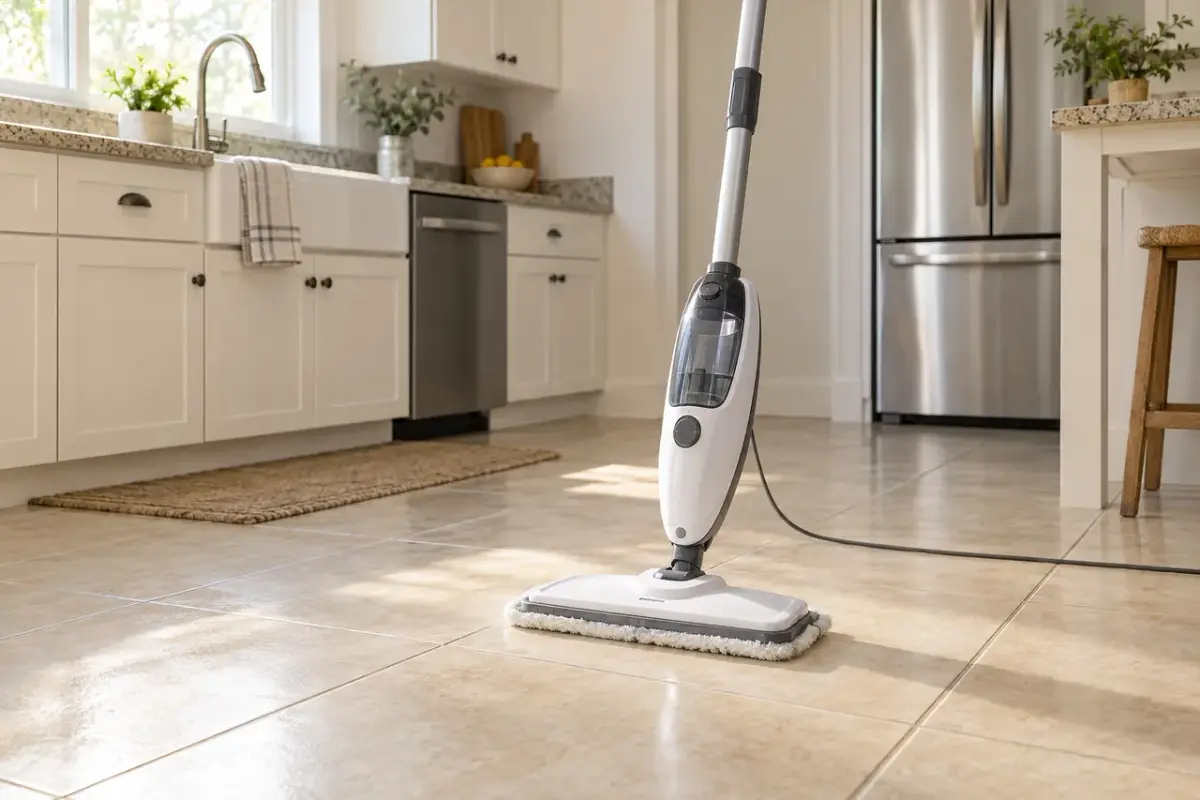
A steam mop heats water into steam and pushes it through a cloth pad. The hot, damp pad softens sticky spills and loosens surface soil, and the pad picks up what it can as you glide it across the floor.
That makes it good at a few things:
- No bucket of dirty water. You’re not spreading one mop-water bath across the whole floor.
- No detergent residue. Used with water only, a steam mop leaves no soapy film behind, and soap film is one of the main things that makes grout attract soil.
- Quick upkeep. It’s easy to run over a kitchen or bathroom floor between deeper cleanings.
Why can a steam mop still make grout darker?
Because it moves soil around more than it removes it.
The pad holds only so much. Once it’s gray, it stops picking up soil and starts spreading it. The pad also rides on the tile surface, and grout sits slightly lower, so the pad barely touches what’s in the grout lines. And steam turns back into water on a cooler floor, runs into those lower lines, and leaves whatever it carried behind when it dries.
The result can look like a clean floor with dark grout lines, which is the same pattern a dirty mop bucket leaves. Our guide to why grout looks dirty again so soon after cleaning explains how porous grout soaks up whatever drains into it.
Steam mop or professional cleaning: what’s the difference?
| Task | Steam mop | Professional tile and grout cleaning |
|---|---|---|
| Loosens surface soil | Yes, with heat and moisture | Yes, with a cleaning solution given time to work |
| Reaches into the grout lines | Barely; the pad rides on the tile | Yes; the grout lines are brushed |
| Rinses the floor | No | Yes, with hot water under pressure |
| Removes the dirty water | Only what the pad absorbs | Extracted through the hose to the truck |
| Clears built-up residue and oil | Limited | Far more than a pad can reach |
| Best used for | Upkeep between cleanings | A deep cleaning, about once a year for most kitchens and bathrooms |
They aren’t competing. A professional cleaning gets out what has built up over months or years, and a steam mop, used well, helps keep it from building up as fast again.
How do you use a steam mop without hurting your grout?
- Vacuum or sweep first. Grit and steam make a muddy paste that the pad pushes straight into the grout lines.
- Start with a clean pad, and have spares. Swap the pad as soon as it looks gray. For a kitchen floor, that may mean two or three pads.
- Use water only in the tank unless the manual says otherwise. Many steam mop makers recommend distilled water in hard-water areas, which includes much of Southern California, to keep mineral scale out of the mop.
- Keep moving. Don’t park the mop in one spot. Concentrated heat and moisture don’t do grout or any sealer on it any favors.
- Wipe up sticky spills first with a damp cloth, rather than steaming syrup or juice across the floor.
- Let the floor dry before walking on it, and keep pets off until it does.
- Wash pads without fabric softener. Softener coats the fibers and makes the pad less absorbent.
Is steam safe on sealed or damaged grout?
Sealed grout. Sealer makers differ on steam. Some advise against regular steam cleaning because heat and moisture can shorten a sealer’s life, so check the product’s instructions or ask whoever applied it. We don’t seal grout, so we can’t tell you what’s on yours, but the installer or the product label can.
Cracked or missing grout. Gaps let water reach the setting bed under the tile. Have the grout repaired, which is a tile contractor’s job, rather than steaming over it.
Other floors. Laminate, vinyl plank and wood floors have their own makers’ rules, and many of those warn against steam. Check before you use the same mop through the whole house.
What about marble, travertine and other natural stone?
We don’t clean or polish natural stone, so we won’t tell you how to steam it. Marble, travertine, limestone and slate need different care than ceramic and porcelain tile. Follow the care guide from the stone supplier or installer, or ask a stone care specialist, and keep vinegar and other acids off marble, travertine and limestone, since acids etch them.
If you’re not sure whether your floor is stone or tile, text a photo to (626) 260-6256 and we’ll tell you whether it’s something we clean.
When does professional cleaning help?
When the steam mop has stopped making a visible difference. Typical signs:
- Grout lines that stay dark however often you steam
- Tile that looks clean when wet and dull once it dries
- Streaks or a hazy film that come back after every pass
- A floor that feels slightly sticky underfoot
- You’re about to price new grout or new tile because the floor looks tired
That’s soil and residue that has built up below what a pad can reach. We apply a cleaning solution matched to the tile and grout, give it time to loosen the soil, brush the grout lines, then rinse with hot water and extract the dirty water straight to our truck-mounted system, so it leaves your house instead of drying back into the grout. If some of the darkening is staining or wear rather than soil, we’ll tell you before we start; our guide on whether dark grout can be cleaned white again covers how to tell.
We’re family-owned and based in West Covina, and we clean tile floors across the San Gabriel Valley. Call (800) 794-9241, text a photo of the floor to (626) 260-6256, or request a time online. More at tile and grout cleaning.