The quickest way to tell carpet beetles from clothes moths in a wool rug is to look for silk. Clothes moth larvae spin it: you’ll find webbing, silk tunnels or small cigar-shaped cases, often with the rug’s own colored fibers woven in. Carpet beetle larvae don’t spin silk; their giveaway is brown, bristly shed skins and tiny pellets about the size of a grain of salt. Both feed on wool and silk in dark, undisturbed places, such as under furniture and along the edges of the rug.
Cleaning removes what they feed on and the debris they leave behind. An active infestation in the house is a job for a pest-control company. Here’s how to tell what you have and what to do next.
How can you tell carpet beetles from clothes moths?
The descriptions below follow University of California pest guidance (listed under this guide), which covers both insects in detail.
| Sign | Clothes moths | Carpet beetles |
|---|---|---|
| Silk | Webbing, silk tubes or mats on the fibers | None |
| Larvae | Shiny white with a dark head | Hairy or bristly, brown, some with tufts |
| What they leave | Cigar-shaped cases about 3/8 inch long (casemaking moths); droppings often the color of the rug’s dye | Brown, shell-like shed skins; pellets the size of salt grains |
| Adults | Small gold or buff moths that flutter weakly and stay near what they’re infesting; not drawn to lights | Tiny round beetles, about 1/10 to 1/8 inch, often black or mottled; drawn to light and often found on windowsills |
| Damage pattern | Surface grazing and holes, more often scattered | More likely a larger damaged area in one part of the rug |
| What else they eat | Wool clothing, upholstery, furs, felt, wool blends | Wool, silk, leather, fur, feathers, pet hair, some stored foods |
Two notes on adults. A moth circling a porch light is unlikely to be a clothes moth, which isn’t drawn to light, and moths in the kitchen are more often pantry moths. And seeing a carpet beetle on a windowsill doesn’t mean your rug is infested. Adults feed outdoors on flowers, including crape myrtle, a common yard and street tree in the San Gabriel Valley, and they come in through windows or on cut flowers. It’s the larvae that eat wool, so the rug itself is where to look.
What does the damage look like on a wool rug?
On a hand-knotted rug, insect damage usually shows up as pile grazed short or eaten away completely, so the knots and the foundation threads show through. It tends to appear where nobody walks and nothing gets moved: under a sofa or bed, beneath a chest that sits on the rug, along the edges by the wall, and on the back of the rug.
That location is the key to telling insect damage from ordinary wear. Wear is in the walkways, where feet go. Insect damage is in the dark, quiet parts of the rug, where they don’t.
Rugs in storage are especially at risk. A wool rug rolled up in a garage or a closet for a few years is exactly the kind of dark, undisturbed place larvae prefer, and University of California guidance notes that fabrics with food, sweat or urine stains are more prone to damage. A rug put away dirty is more attractive than a clean one.
How do you check a rug for moths or carpet beetles?
- Pick a bright day and clear the rug. Move any furniture off it so you can see the areas that are normally covered.
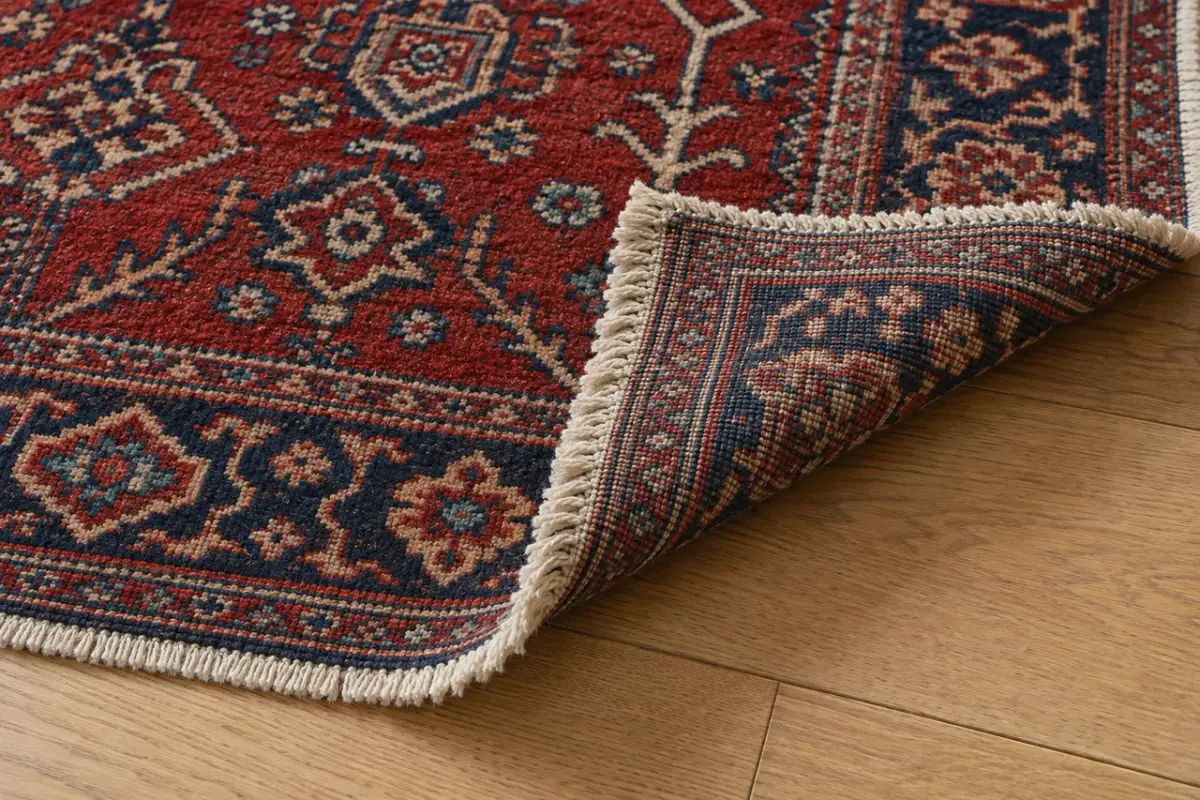
- Fold back each corner. Check the back of the rug and the floor underneath. Larvae avoid light, so they’re often on the underside.
- Look along the edges and in the spots where furniture legs or a bed frame sat.
- Part the pile in any thin or bare patch. Look for webbing, cases, shed skins and pellets down at the knots.
- Check other wool nearby. Other rugs, wool clothing in closets, upholstered furniture and anything with felt or feathers. One infested item often means others.
- Photograph what you find. The front, the back and a close-up of the damage.
- Vacuum the floor under the rug and the rug itself with suction only, then empty the vacuum outdoors right away.
What does cleaning do, and what doesn’t it do?
What it does. A thorough professional cleaning removes the soil, food residue and stains that make wool more attractive to these insects, along with the debris they leave in the pile: cases, shed skins and droppings. With that cleared, you can see the true extent of any damage, and fresh activity is easier to spot later.
What it doesn’t do. Cleaning a rug doesn’t treat the house. Larvae and eggs in the closet, along the baseboards, under other furniture or in another rug are still there after your rug comes back clean. If you’re finding live larvae, new damage or insects in more than one place, call a pest-control company. University of California guidance says widespread or heavy infestations often require a professional pest control applicator. We clean rugs; we don’t do pest control.
Ask the pest-control company how they want rugs handled during their treatment and when the rug should be cleaned relative to it. Leave insecticides to them rather than spraying the rug yourself. When you book the cleaning, tell us what you’ve seen, so we know what we’re picking up.
What it can’t bring back. Pile that has been eaten is gone. Cleaning won’t regrow it, and an eaten patch will still be an eaten patch on a clean rug. Re-knotting or reweaving damaged areas is a job for a rug repair specialist.
Can a moth-eaten or beetle-damaged rug be saved?
Often, if the damage is limited. A rug with a few grazed patches under where the sofa sat is usually worth cleaning, and small areas can be repaired by a specialist. Large areas eaten down to the foundation are a harder call, especially on an inexpensive machine-made rug. Our guide on whether a rug needs cleaning or replacing walks through the other signs that a rug is past saving.
How do you keep moths and beetles out of rugs?
- Vacuum regularly, including under furniture and along the edges, and flip a corner now and then to vacuum the back.
- Move furniture and rotate the rug once or twice a year, so no part of it stays dark and undisturbed for long.
- Blot spills and pet accidents promptly, since stained wool is more vulnerable.
- Clean a rug before you store it, and check stored rugs a couple of times a year.
- Know your fiber. Wool and silk are what these insects eat. Our guide to identifying what your rug is made of shows how to check.
When should you call?
Call a pest-control company first if you’re seeing live larvae, fresh webbing or new damage, or signs in more than one room. Call us when the house is under control and the rug needs cleaning, or when you’ve found old damage and want the rug cleaned and looked over.
We pick up wool, oriental and hand-knotted rugs, clean them off-site and bring them back, and we serve homes across West Covina, Pasadena, Arcadia and the rest of the San Gabriel Valley. Text photos of the front, the back and the damage to (626) 260-6256, or call (800) 794-9241. More on fine and hand-made rugs at oriental and wool rug cleaning, and on everything else at area rug cleaning.