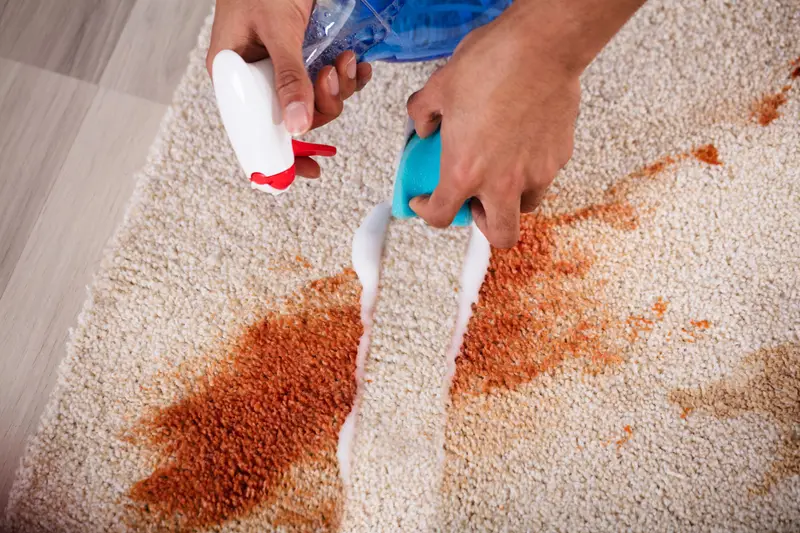
To get milk or baby formula out of carpet, soak up as much as you can with a stack of paper towels, then blot with cool water, never hot. A few drops of clear dish soap in a cup of cool water lifts the fat; rinse two or three times with plain water and dry the spot quickly. The visible mark usually comes out easily. The real problem is the milk you can’t see: left in the backing or pad, it sours, and the smell often shows up days later.
Why does spilled milk smell days later?
Milk is mostly water carrying protein, fat and milk sugar. Spread through carpet fiber and backing at room temperature, it breaks down and sours, like a glass left out on the counter, and faster in a warm San Gabriel Valley summer. A spill that looked fine after a quick wipe can smell sour by the weekend, and the smell can return on humid days.
Heat is the other problem. It cooks milk protein onto the fiber, like milk scorching in a pan, and that film is far harder to rinse out. Keep everything cool.
What’s different about formula and spit-up?
Formula is milk or soy protein plus vegetable oils and added nutrients, mixed thicker than milk, so it leaves more of a film. Formula and spit-up marks can also turn yellow as they age, even when the spot looked clean at first. The method is the same for all of them: lift anything thick with a spoon, then cool water, dish soap and plenty of rinsing.
How do you get milk out of carpet, step by step?
- Soak it up. Press a thick stack of paper towels onto the spill. For a dropped bottle or sippy cup, stand on the stack, swapping in dry towels until they come up nearly dry.
- Blot with cool water. Dab it on and blot it up.
- Dish soap. A few drops of clear dish soap in a cup of cool water, dabbed on and blotted.
- Rinse more than usual. Mist with plain water and blot, two or three times. Any milk left behind is what sours.
- For a mark or faint smell after it dries, on synthetic carpet, use a household enzyme cleaner made for protein stains, the kind sold for pet accidents. Test it in a hidden spot first and follow the label’s wait time; enzymes work slowly.
- Dry it fast. Run a fan over the spot, or leave a weighted white towel on it overnight.
What about a couch, glider or nursery chair?
On W or WS fabric, use the dish soap solution on a cloth, rinse with a barely damp cloth, and press a dry towel down firmly to draw milk out of the cushion foam before it sours there. On S fabric, blot and call; water can ring it, and solvent does little for protein. On X, blot and call. On leather, wipe protected leather with a barely damp cloth; on soft aniline leather, blot only. Upholstery we clean usually dries in about 4 to 8 hours.
What about wool rugs in a nursery?
Wool and silk are protein fibers, so enzyme cleaners that break down milk protein can damage them as well. On wool, use cool water and blotting, a drop of dish soap if needed, and a careful rinse, then dry the rug flat with a fan and a towel underneath. On viscose, blot dry only.
What if the sour smell comes back?
That usually means milk reached the pad. A scented spray covers it for a day or two without removing anything; deodorizing vs. odor removal explains the difference. The sour milk section of our carpet odors guide covers when it’s time for extraction.
Milk smell in the carpet in West Covina?
Buyher’s is family-owned and based in West Covina. Our carpet cleaning rinses residue out of the backing with truck-mounted hot-water extraction and eco-friendly, non-toxic products that are safe around kids and pets. Text a photo of the spot to (626) 260-6256 or call (800) 794-9241, day or night.