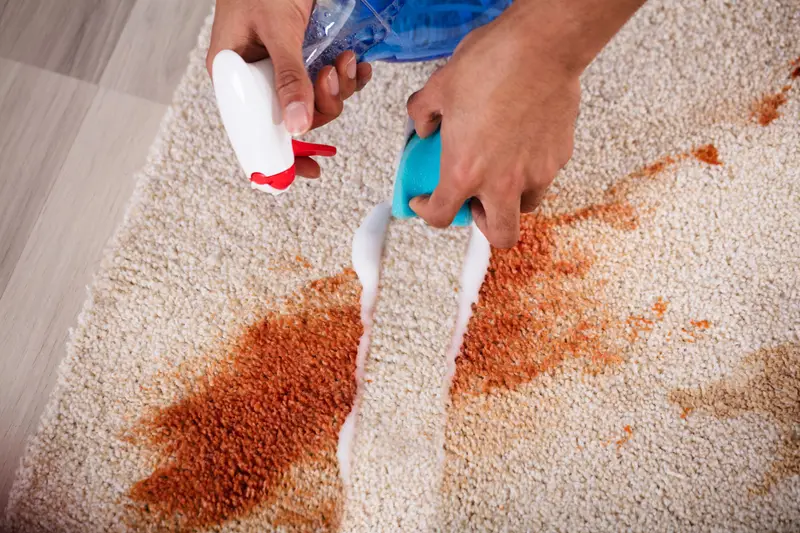
To get grease or cooking oil out of carpet, soak up as much as you can before adding any liquid: blot, then cover the spot with cornstarch or baking soda for 15 to 20 minutes and vacuum it out. Then blot with a few drops of clear dish soap in lukewarm water, rinse with plain water, and blot dry. Water alone just pushes oil around; dish soap is what lets the rinse carry it away. This page covers kitchen grease; for black marks tracked in from the garage, see motor oil and tar.
Why doesn’t water get grease out?
Oil and water don’t mix. Water beads on top of an oil spot, and scrubbing the two together spreads the oil wider. Dish soap works because it surrounds droplets of oil so water can lift them out of the fiber. Pasta and pizza sauce add a second problem: the red in cooked tomato rides along with the oil, so tomato sauce and ketchup need an extra step for the orange tint that’s left.
The fiber matters too. Olefin, also called polypropylene, is common in budget carpet, berber-style loops and many area rugs, and it attracts and holds oil, so oil spots on olefin are often the slowest to come out. Nylon and polyester let go of oil a little more easily.
How do you get grease out of carpet, step by step?
- Scoop solids. Lift butter or food with a spoon.
- Blot the oil. Press paper towels straight down and lift, turning to fresh towels as they soak through.
- Absorb. Sprinkle on a generous layer of cornstarch or baking soda, leave it 15 to 20 minutes (longer for a big spill), and vacuum. Repeat if it came up clumped and oily.
- Cut what’s left. Mix a few drops of clear dish soap into a cup of lukewarm water, not hot. Dab it on, wait a minute, and blot. Repeat while the cloth still comes up greasy.
- Rinse thoroughly. Mist with plain water and blot several times; leftover soap makes grease spots return.
- Dry. A weighted white towel overnight, or a fan.
Test the soap solution inside a closet first.
Why does an oil spot get darker weeks later?
Oil left deep in the pile stays slightly sticky, and every footstep leaves a little soil on it. Leftover soap does the same, so a spot that looked clean on Sunday can be a gray patch by the end of the month. Why carpet stains come back after cleaning explains how to tell residue from wicking.
A wide gray path where the kitchen meets the carpet usually isn’t a spill at all. Cooking oil settles on the kitchen floor and gets carried onto the carpet by shoes and socks, so it’s oily soil across a traffic lane, not a spot. A degreasing pre-conditioning treatment on the lane, followed by hot-water extraction, is what rinses it out.
What about grease on a couch?
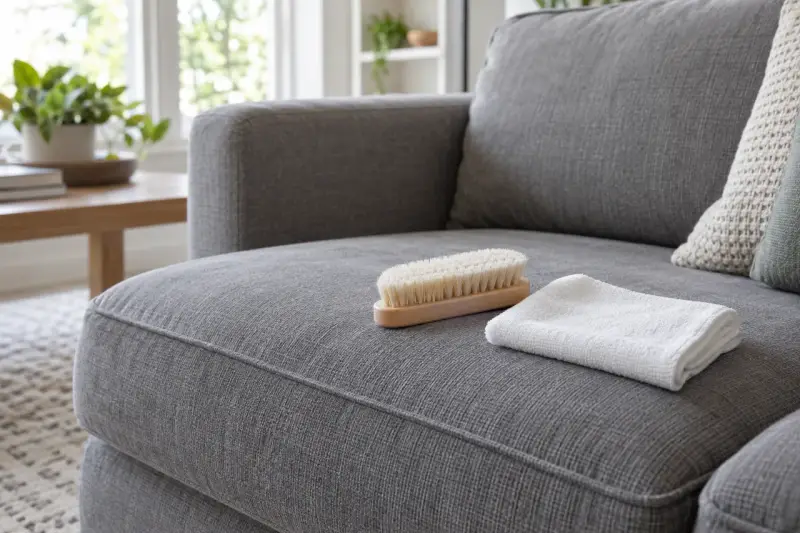
Popcorn butter, pizza and takeout often end up on the couch. On any code except X, pressing cornstarch onto fresh oil and vacuuming it off later is a safe first step. On W fabric, follow with a little dish soap solution on a cloth, a barely damp rinse and a fan. On S fabric, oil is a good match for a solvent cleaner labeled for S fabrics, after a hidden test; how to clean a microfiber couch covers S-coded fabric step by step. WS can take either approach. On X, blot and call. On leather, blot without adding water, and call for oil on aniline leather.
What about wool and natural-fiber rugs?
Absorbent powder and vacuuming are safe on wool. Follow with a very small amount of dish soap in lukewarm water, and rinse well, since soap left in wool attracts soil. On jute and sisal, absorb, vacuum and stop: water browns them, and oil soaks into plant fiber fast.
Grease spot in West Covina that keeps coming back?
Buyher’s is family-owned and based in West Covina, and our carpet cleaning uses truck-mounted hot-water extraction to flush out oil and old soap together. Text a photo of the spot to (626) 260-6256 for a free, upfront quote, or call (800) 794-9241.