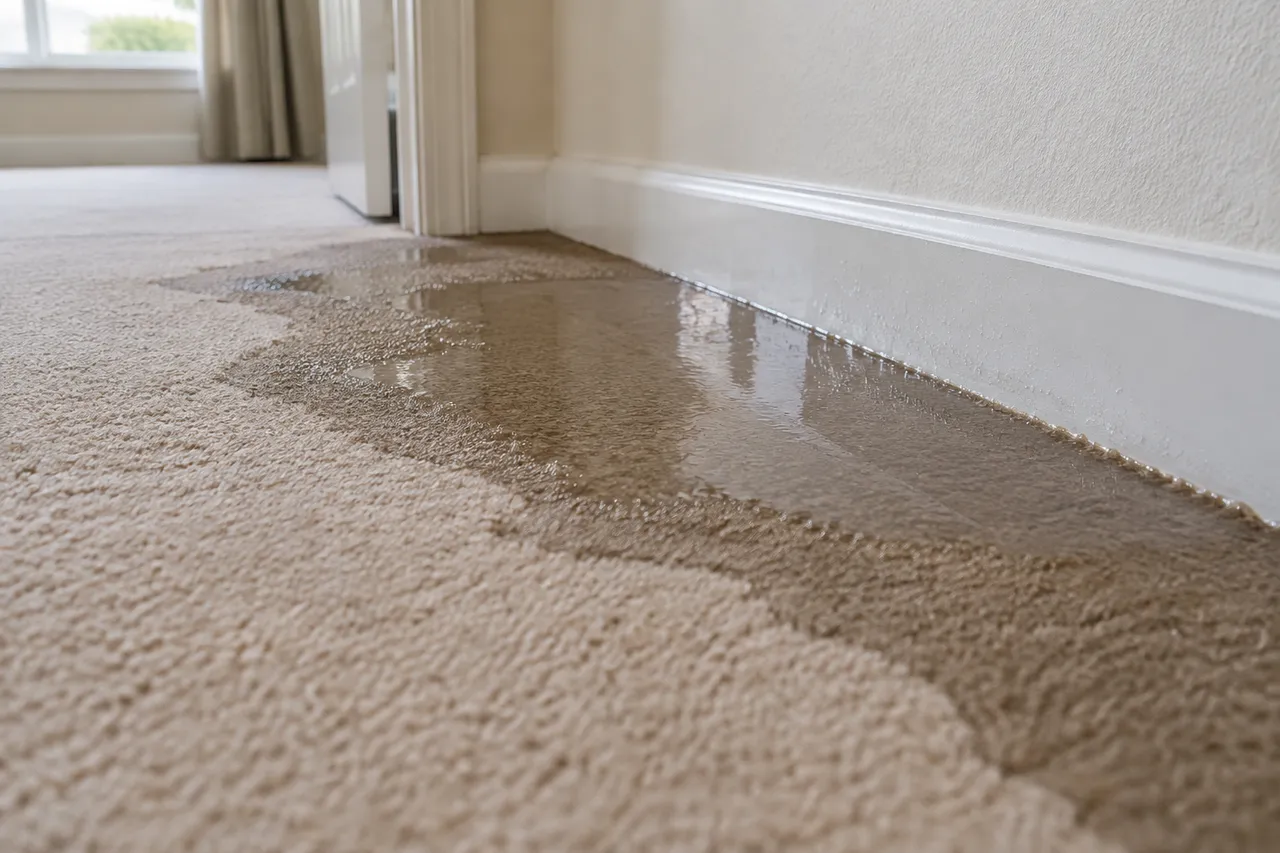
Water on the floor is one of the few household problems where the first hour genuinely changes the outcome. Not the first day — the first hour. Here is the sequence that matters, in order, without drama.
1. Stop the water
Everything else is secondary. If it is an appliance, shut its supply valve — washing machines, dishwashers and water heaters all have one within reach. If you cannot find it or the leak is in the plumbing itself, use the main shutoff for the house.
Worth doing before you need it: find your main shutoff now and make sure it turns. Plenty of people discover during an emergency that theirs is seized, painted over, or behind a cupboard that has not been opened in ten years.
2. Deal with electricity if water is near it
If water has reached outlets, cords, or a plugged-in appliance, cut power to that area at the breaker before you go wading in. If you cannot do that safely — the panel is in the wet area, you would have to stand in water to reach it — leave the room and call an electrician. No carpet is worth this.
3. Get what you can off the floor
Move furniture out of the wet area if it is safe to lift. Two specific things do damage fast:
- Wood furniture legs leach stain into wet carpet, and those marks are stubborn. If you cannot move a piece, slide foil or a plastic lid under each leg.
- Anything with dye — rugs with jute backing, cardboard boxes, newspaper, coloured fabric — will transfer colour into wet carpet. Get them off it.
Lift the contents of low cabinets and lower shelves near the water too, since it is travelling further than you can see.
4. Remove standing water — but know what you are removing
If you have a wet/dry vac and the water is clean, use it. Every litre you take up is water that is not soaking further into the pad, the subfloor, and the bottom of the drywall.
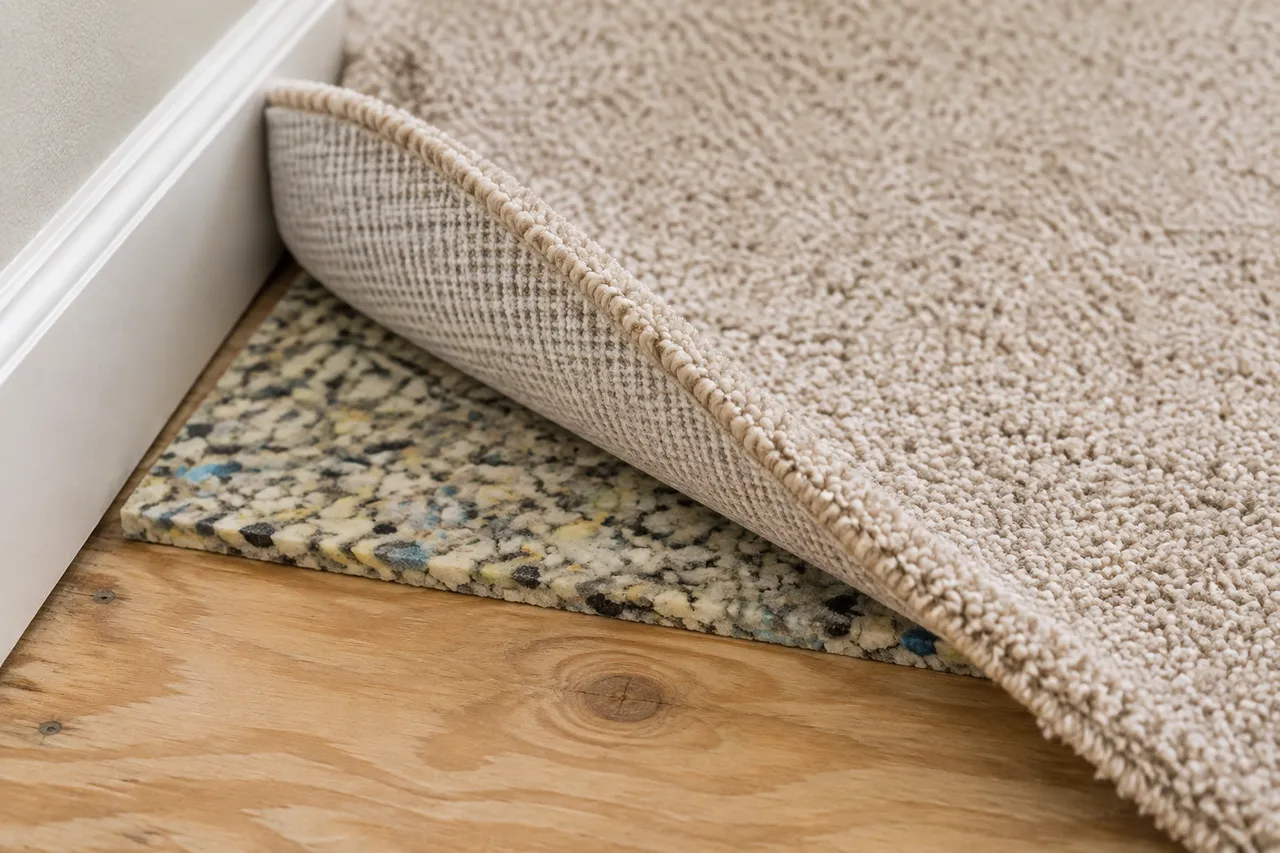
Be clear about what that achieves, though: a shop vac lifts surface water. It does not have anything like the airflow needed to pull water out of carpet padding, which is a sponge by design. Think of it as limiting the spread rather than solving the problem.
Towels work too, and are better than nothing, but you will run out of dry ones long before you run out of water.
5. Get air moving
Open windows if the weather allows, run ceiling and box fans pointed across the wet area rather than straight down, and leave the air conditioning on — AC dehumidifies as it cools, which genuinely helps. In a Southern California summer, dry air moving across a wet floor is a real asset, and one of the few parts of this where our climate is on your side.
6. Photograph it before you tidy up
Take more pictures than feel necessary, from several angles, including the source. If there is any chance of an insurance claim, the documentation you want is of the damage as it happened, not after you have cleaned up. This costs sixty seconds and is occasionally worth thousands.
7. Call — and say what kind of water it is
When you call us on (800) 794-9241, the first thing worth telling us is where the water came from, because it changes the whole job:
- Clean supply water — a burst pipe, a supply line, an overflowing tub. The best case, and very often fully salvageable.
- Grey water — a washing machine or dishwasher discharge, which carries detergent and soil.
- Sewage or a toilet backflow — a health matter, not a cleaning matter. Carpet and pad in that category are not salvageable and should not be treated as if they were. We will tell you that plainly rather than take the job.
Tell us how long it has been sitting, roughly how large the area is, and whether it has reached more than one room. You can text a photo to (626) 260-6256 — for water, pictures tell us more in five seconds than five minutes of description.
The mistake that costs the most
Waiting to see whether it dries on its own.
It is an entirely understandable instinct. The surface dries, the room looks normal, and the problem appears to have solved itself. Meanwhile the padding — which is absorbent by design — is still holding water against the subfloor, in the dark, with no airflow. That is where odor develops, where the subfloor is damaged, and where a manageable cleaning becomes a replacement.
Carpet that feels dry on top can still be soaked underneath. We cover exactly why in why carpet that feels dry can still be wet.
Where you are changes the picture
In most of the San Gabriel Valley homes sit on a concrete slab, and on a slab water spreads sideways — it runs under walls into adjoining rooms along the slab surface, often showing up two rooms away before anyone notices it in the room where the leak started. The wet area is almost always larger than the visible one.
Some older houses, including parts of Covina near downtown, have raised wood floors instead. There water can pass through into the crawl space, where it is out of sight and dries slowly. Different mechanism, same conclusion: what you can see is not the whole of it.
We are open around the clock
We answer the phone 24 hours a day, seven days a week, because water does not keep business hours. Turn the water off first, then call (800) 794-9241 and we will tell you honestly what our arrival time looks like — and if the situation needs someone who can be there faster than we can, we will say so rather than let you wait on us.
More on the service at flood & water damage and water extraction.