To clean dog or cat vomit from carpet, lift the solids first with a spoon or a piece of stiff card, scooping from the edges in without pressing down. Blot the wet part with white paper towels, then dab on cool water with a few drops of clear dish soap, rinse with plain water and blot dry. Finish with an enzyme cleaner made for pet messes if there’s any smell. Skip hot water, steam and bleach. Vomit is mostly protein and stomach acid; heat can set it, and both the acid and strong cleaners can change the carpet’s color.
Here’s each step, how to tell a stain problem from an odor problem, and what to do when a spot changes color.
How do you clean pet vomit from carpet, step by step?
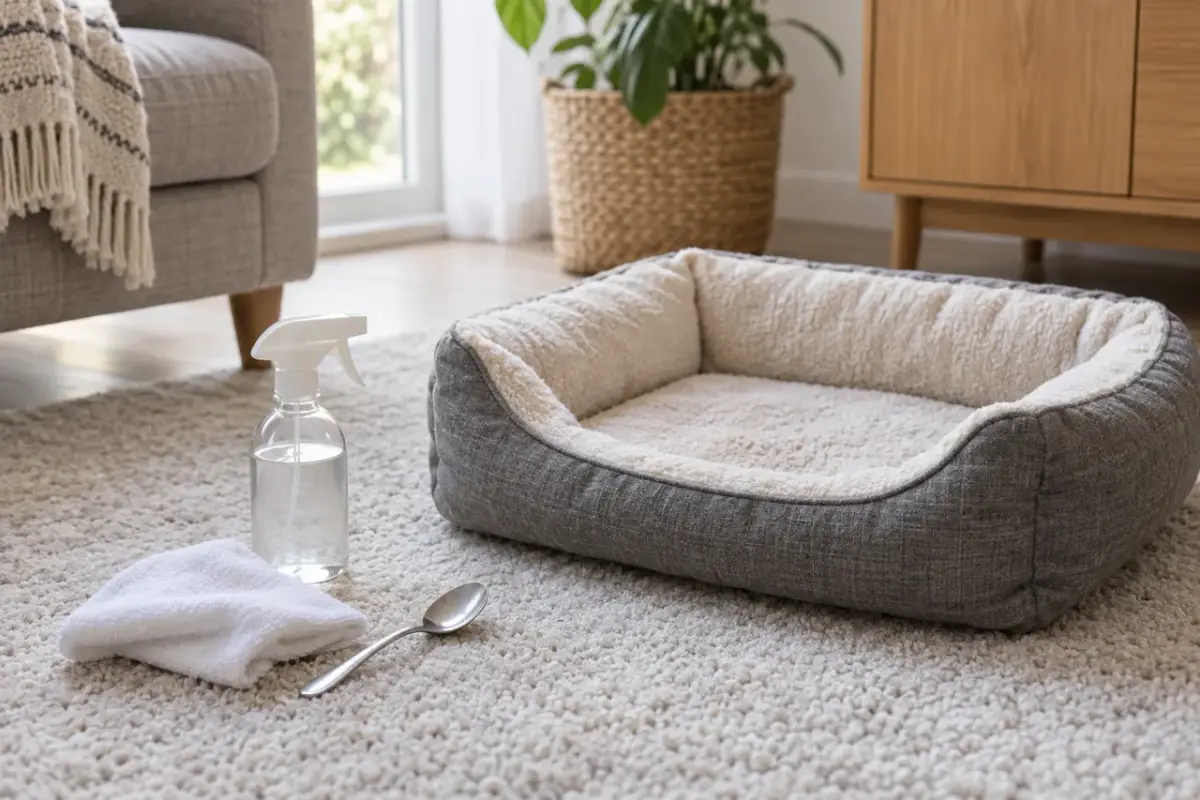
- Lift the solids. Use a spoon, a dull knife, a plastic card or a dustpan. Slide it under the mess from the edge toward the center and lift. Don’t wipe, and don’t press a paper towel down on top, which pushes it into the pile.
- Blot the liquid. Press white paper towels or a white cloth straight down and lift, turning to a clean section each time. Work from the outside of the spot inward so it doesn’t spread.
- Clean with a mild solution. Mix a few drops of clear dish soap into a cup of cool water. Dab it on with a white cloth, then blot. Repeat until nothing more comes up on the cloth.
- Rinse. Mist the area lightly with plain cool water and blot again. Soap left in the carpet attracts dirt and makes the spot look like it came back.
- Treat any smell. Apply an enzyme cleaner made for pet messes, after testing it on a hidden spot. Read the label: some aren’t meant for wool or silk.
- Dry it. Lay a folded dry towel over the spot and press, then let it air-dry with a fan or the AC running.
- Look again once it’s dry. If there’s a shadow, a color change or a smell, see the sections below before adding more products.
Is it a stain or an odor problem?
Pet vomit gives you two separate problems, and they don’t always show up together.
The stain is what’s left on the fibers: food dyes, bile, grass, or the acid’s effect on the carpet’s own color. It sits mostly near the surface.
The odor comes from residue deeper in the pile. Vomit is usually thicker than urine, so less of it soaks through, which is one reason it’s often easier to deal with than a urine accident. A large, watery episode behaves more like urine and can reach the pad, and then the smell can return on warm days even after the surface looks clean. Why pet urine smell comes back after cleaning explains how that works under carpet.
If the spot looks clean but still smells, a fragrance spray won’t fix it. Carpet deodorizing vs. odor removal covers why the source has to be treated, not covered.
Why does pet vomit change the color of carpet?
There are a few common reasons, and they call for different responses:
| What you see | What it usually is | What to do |
|---|---|---|
| Yellow or orange ring | Bile and stomach acid | Clean it the same day; call if it stays after drying |
| Red, orange or brown color | Dye from food, treats or chews | Treat it like a dye stain and call early |
| Green or brown streaks | Grass or plant material | Blot with the dish soap solution, repeatedly |
| A lighter patch | Color lost to acid or a strong cleaner | Can’t be cleaned back; stop adding products |
| A dark spot that returns | Residue wicking up from below | Rinse it out properly; more product makes it worse |
| Smell after it’s dry | Residue deeper in the pile or pad | Enzyme treatment that reaches the source |
Dye from pet food. Brightly colored kibble, treats and chews can leave a stain that acts like spilled fruit punch: the color grabs onto the fiber quickly. Our guide to common carpet stains covers how dye stains behave.
Acid and bile. Left to sit, they can stain light carpet yellow or orange or shift the carpet’s color, which is why speed matters more than the product you use.
The cleaner. Bleach, hydrogen peroxide and “oxy” products can lighten carpet dye, especially on dark carpet and on wool. A light patch made by a cleaner is permanent, so test anything stronger than dish soap in a closet first.
How do you clean vomit from an area rug?
Rugs need a gentler hand than wall-to-wall carpet:
- Slide a towel under the spot if you can lift the rug, so moisture doesn’t sit against a wood or tile floor, and clean the floor underneath if anything went through.
- Wool and hand-knotted rugs: lift the solids and blot with cool water only, using as little as possible. Wool is a protein fiber, and strong alkaline cleaners and some enzyme products can damage it. Send a photo before trying anything else.
- Jute, sisal and cotton brown easily when wet, so use the least water you can and dry them quickly.
- Shag and high pile: work the solids out from between the fibers with a spoon before you blot.
Not sure what your rug is made of? What your rug is made of walks through the quick checks.
What should you avoid?
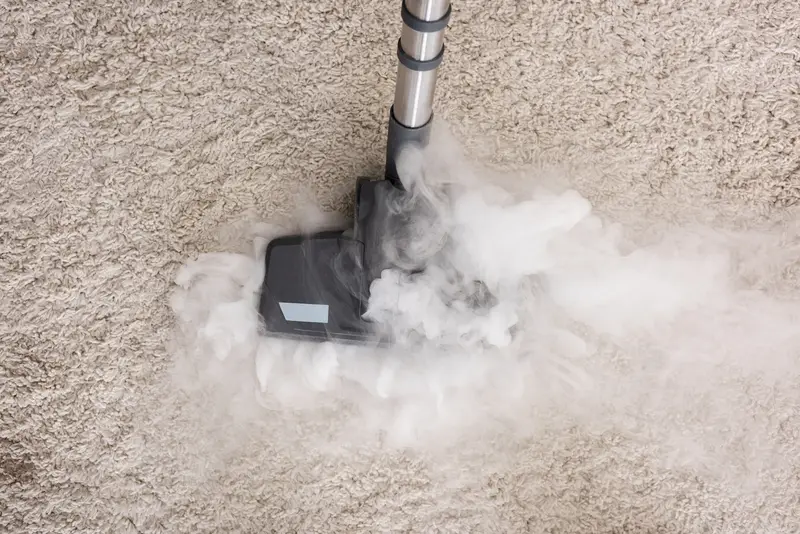
- Hot water, steam cleaners and irons. Heat can set the protein in vomit into the fiber.
- Bleach, hydrogen peroxide and oxy powders, which can lighten the carpet’s color.
- Scrubbing and stiff brushes. They spread the mess and fray the fiber tips, so the area looks worn even after it’s clean.
- Colored towels, which can transfer their dye into wet carpet.
- Ammonia cleaners. Pets can read the smell as a place to mark.
- Scented sprays and powders, which mask the smell for a day or two and leave the cause in place.
When should you call a professional?
- A color change is still there after the spot dries.
- The smell lingers or comes back on warm days.
- It’s on a wool, silk or hand-knotted rug.
- There are spots all over the house, such as a cat’s favorite stair or hallway corner.
- You’ve already tried a couple of products.
On a pet stain job, we look at the spot and the fiber first, use a spotting treatment matched to what caused it, apply enzyme treatment where there’s odor, and rinse it out with truck-mounted hot-water extraction. Our pet odor and stain removal page explains the process for carpet, rugs and upholstery. Some color changes, especially lost color, can’t be fully reversed, and we’ll tell you that before we start.
If your pet is vomiting often, that’s a question for your veterinarian rather than a carpet cleaner.
Pet stain help in Glendora, San Dimas and the SGV
Buyher’s is a family-owned, licensed and insured company based in West Covina, cleaning carpet and rugs since 1987 with eco-friendly, non-toxic products. We come to homes in Glendora, San Dimas and across the San Gabriel Valley, and area rugs can be cleaned on site or picked up and brought back.
Text a photo of the spot to (626) 260-6256 or call (800) 794-9241, any hour. Online booking opens about a week out; for anything sooner, call and we’ll fit you in if the schedule allows.