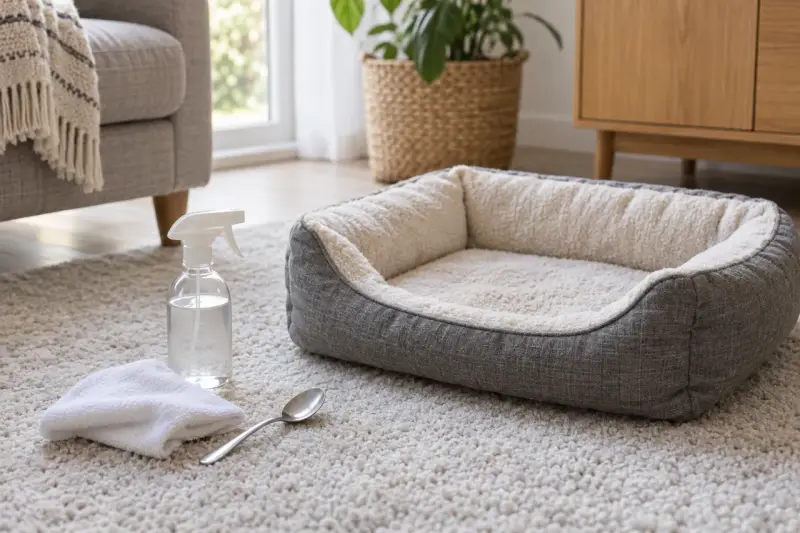
To get dog or cat poop out of carpet, put on gloves and lift the solids first: pick firm stool straight up through a bag or paper towel, and scrape soft stool from the edges in with a plastic card or spoon. Then blot with a few drops of clear dish soap in a cup of cool water, rinse with plain water and blot dry. Finish with an enzyme cleaner made for pet messes to deal with the smell. Skip hot water, steam and bleach, and wash your hands when you’re done, since dog and cat poop can carry germs.
Why is pet poop harder than it looks?
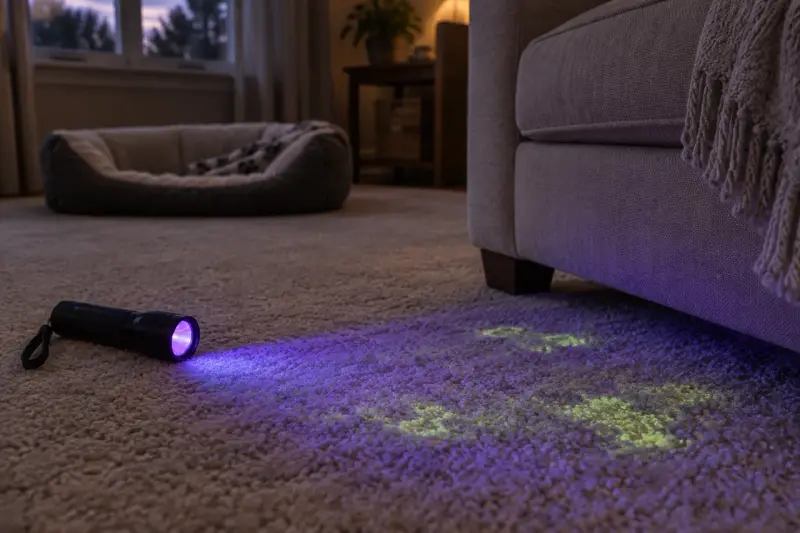
There are two problems in one spot. The visible part is pigment from bile and food, and once it’s ground into the fiber it behaves like a dye, which is why smearing is the biggest risk. The invisible part is organic residue that holds the smell and draws a pet back. Heat can set it; enzyme cleaners are made to break it down.
Firm stool usually lifts off cleanly. Diarrhea is a different job: it soaks into the pile and often reaches the backing.
How do you clean it, step by step?
- Protect yourself. Wear disposable gloves and keep pets and kids out of the room.
- Lift the solids. Grab firm stool through a bag or a wad of paper towel and lift straight up. For soft stool, slide a plastic card or dustpan under the edge and scoop toward the center.
- Blot the stain. Mix a few drops of clear dish soap into a cup of cool water. Dab it on with a white cloth and blot, turning to a clean section each time and working from the outside in.
- Rinse. Mist with plain cool water and blot again.
- Treat the smell. Test an enzyme cleaner made for pet messes on a hidden spot, then apply it as the label says and give it the full time to work.
- Dry and clean up. Press a dry towel onto the spot and let it air-dry. Put used towels and gloves in a sealed bag, and wash your hands.
If there’s urine in the same spot, it needs more than this: pet urine on carpet and why the smell comes back covers what happens in the pad underneath. Vomit has its own guide, how to clean dog or cat vomit from carpet.
What about a couch or an area rug?
On upholstery, lift the solids, then check the cleaning code under the cushions before anything wet goes on. W and WS fabrics can take the dish soap solution, used sparingly so it doesn’t reach the cushion foam. On S or X fabric, lift and blot only, then call. On leather, wipe with a damp cloth and dry it straight away.
On rugs, slide a towel underneath if you can. Wool is a protein fiber and some enzyme products can damage it, so read the label, or skip that step and call. Cotton, jute and sisal brown when they get wet. On shag, work the solids out from between the strands before you blot. Rugs can also be picked up, cleaned off-site and brought back.
What if a mark or smell is still there?
A brown or yellow shadow after drying is pigment bonded to the fiber; more scrubbing makes it fuzzy and bigger, not lighter. A smell on warm days means residue is still deeper in the pile. Another round of enzyme cleaner, left for its full time, sometimes finishes the job. If not, our pet odor and stain removal uses enzyme treatment aimed at the source.
Pet stain help in West Covina and the San Gabriel Valley
Buyher’s is family-owned and based in West Covina, and has cleaned carpet, rugs and furniture for pet households across the San Gabriel Valley since 1987 with eco-friendly, non-toxic products that are safe for kids and pets. Text a photo of the spot to (626) 260-6256 for a free quote, or call (800) 794-9241 any hour.