
Vacuuming is an essential part of keeping your home clean—but it only solves part of the problem. Even the most powerful household vacuum cleaners remove just a fraction of what’s really hiding inside your carpet. That’s why carpets still look dull, traffic lanes develop, and odors return even after vacuuming.
To understand why, we need to look at what carpet fibers are made of, how dirt bonds to them, and why professional deep cleaning is the only way to fully remove embedded contaminants.
If you want your carpet to last longer, stay healthier, and look better, here’s the scientific explanation of why vacuuming alone just isn’t enough.
1. Vacuuming Only Removes Surface-Level Dirt
Most vacuums—upright or canister—use suction and airflow to lift loose particles from the top layers of carpet. But even high-end vacuums only remove about 70% of loose particles and less than 10% of embedded soils.
Why? Because carpet fibers are layered:
- Tip layer – the part you see
- Mid layer – where dirt gets trapped and compressed
- Base layer – where fibers attach to the backing
- Padding – where moisture, odor, and bacteria settle
Your vacuum only affects the top 1–3 millimeters of the carpet. The real contaminants live much deeper.
2. Dirt Particles Bond to Carpet Fibers — They Don’t Just Sit Loose
Over time, foot traffic grinds dirt into the carpet. Oils from skin, pets, and everyday life create a sticky layer that causes dirt to adhere to fiber surfaces.
Once dirt is coated in oil, it becomes nearly impossible for a vacuum to remove. It’s almost like trying to vacuum sand that has been glued to the floor.
These sticky soils include:
- Cooking oils
- Pet dander
- Human skin oils
- Outdoor pollution
- Grease from driveways or garages
- Residue from cleaning products
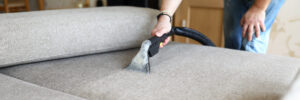
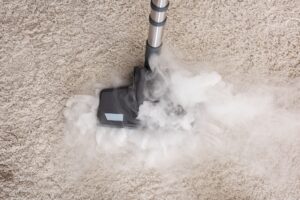
Hot water extraction (true professional steam cleaning) uses heat + water molecules + pressure to break the bond between the dirt and the fiber, something vacuums cannot do.
Learn more about what professional cleaning removes:
Professional Carpet Cleaning – Buyher’s Carpet & Upholstery
3. Bacteria, Allergens, and Microorganisms Live Deep in Carpet
Even in clean homes, carpet holds:
- Bacteria
- Dust mites
- Pet dander
- Pollen
- Fungal spores
- Mold fragments
- Microscopic pollutants
These microscopic contaminants settle deep into the backing and padding of the carpet where vacuums cannot reach. Studies show that up to 80% of indoor dust ends up embedded in carpets—much of it made of skin cells that feed bacteria and dust mites.
Vacuuming removes loose dust but does not kill microorganisms or remove colony buildup.
Hot water extraction at 200–230°F eliminates bacteria and flushes contaminants from deep within the carpet system.
4. Odors Are Caused by Bacteria in the Padding — Not the Surface
If your carpet smells like:
- Pets
- Spills
- Mildew
- “Old house” odor
- Smoke
- Food or grease
…the problem is below the surface. Odors come from bacteria and moisture trapped in the carpet padding.
Vacuuming cannot address:
- Pet urine that has soaked beneath the fibers
- Spills that reached the padding
- Mildew caused by moisture
- Food residue stuck deep in the base layer
Professional extraction flushes the odor-causing substances out of the carpet and padding. Learn more about odor removal here:
Pet Odor & Stain Removal
5. Vacuums Don’t Remove Oils — and Oils Are What Trap Dirt
Everyday life introduces oils that coat carpet fibers:
- Cooking oils
- Pet fur oils
- Skin oils from bare feet
- Moisturizers and lotions
- Airborne grease from kitchens
These oils act like glue.
Once fibers are coated, dirt sticks and becomes impossible to vacuum out.
Professional cleaning uses hot water, pressure, and detergents designed to break through oils and release trapped dirt.
6. Traffic Lanes Form Because Dirt Scratches Carpet Fibers
You’ve probably seen gray or dull-looking paths in the carpet leading to:
- Bedrooms
- Hallways
- Living rooms
- Staircases
These “traffic lanes” happen when dirt acts like fine sandpaper. When fibers are scratched repeatedly, they lose their reflectivity—and no amount of vacuuming will restore the look.
Only deep cleaning removes the abrasive particles before they cause permanent wear.
7. Vacuuming Doesn’t Remove Liquid Spills, Sticky Residue, or Stains
Vacuums cannot remove:
- Drink spills
- Food stains
- Sticky residues
- Pet accidents
- Soap residue from DIY cleaners
Liquids penetrate downward through three layers:
- Carpet fiber
- Carpet backing
- Padding
Vacuum suction simply isn’t designed to extract liquid or dissolve residue. That’s why stains reappear days or weeks later — a phenomenon known as wicking.
Only professional extraction prevents stains from resurfacing.
8. Vacuuming Alone Cannot Keep Indoor Air Healthy
Carpet acts as a giant air filter. It traps airborne contaminants that would otherwise float in your home. But once it becomes saturated, those particles begin releasing back into the air.
This increases indoor levels of:
- Dust
- Allergens
- Volatile organic compounds (VOCs)
- Bacteria
- Pet dander
- Mites
Vacuuming collects loose surface dust, but only deep cleaning resets the “air filter” effect.
9. The Science Behind Hot Water Extraction (Why Professionals Use It)
Professional steam cleaning works because it uses four key scientific principles:
1. HEAT
Water at 200–230°F breaks down oils and kills microorganisms.
2. PRESSURE
High-pressure jets drive water deep into the fibers and backing.
3. EXTRACTION
Powerful vacuum systems remove dirt, bacteria, and moisture completely.
4. CHEMISTRY
Neutralizing agents dissolve sticky residues and protect fibers.
These four elements are impossible to reproduce with home vacuums or store-bought machines.
See how our professional method works:
Buyher’s Carpet Cleaning – Deep Extraction Process
10. The Bottom Line: Vacuuming Is Maintenance — Not Cleaning
Vacuuming is absolutely important. You should vacuum:
- Once a week (single adults)
- Twice a week (families or high traffic)
- Daily (multiple pets or allergies)
But vacuuming only addresses loose dirt — not embedded soil, bacteria, stains, oils, or odors.
To keep your carpet healthy and long-lasting, deep cleaning is needed every:
- 6 months for families with kids or pets
- 12 months for standard households
- 3–6 months for high-traffic commercial properties
Anything less allows dirt accumulation that permanently damages fibers.
Ready for a Truly Clean Carpet?
If your carpet still looks dirty after vacuuming—or if you’re noticing odors, stains, or allergies—it’s time for a deep clean that reaches the layers your vacuum can’t touch.
Buyher’s Carpet & Upholstery Cleaning uses professional-grade hot water extraction to remove:
- Bacteria
- Pet odors
- Embedded dirt
- Stains and spills
- Allergens
- Sticky residues
Serving West Covina, Covina, Azusa, Diamond Bar, Walnut, Pomona, Glendora, San Dimas, and the entire San Gabriel Valley.
📞 Call Anytime: (800) 794-9241
Professional Carpet Cleaning
Pet Odor & Stain Treatment
Water Damage & Extraction Services